What Is Offshore Construction?
Offshore construction stands at the crossroads of engineering excellence and environmental challenge. It is the art and science of building massive structures -not on land- but in some of the most unpredictable environments on Earth. From wind farms rising out of the North Sea to oil platforms anchored in deep ocean basins, offshore construction projects demand precision, innovation, and resilience far beyond what’s required onshore.
In today’s era of global energy transition and coastal urbanization, offshore construction has become one of the most capital-intensive and strategically significant sectors. It connects multiple disciplines -civil, marine, and mechanical engineering- while relying heavily on specialized lifting and handling equipment to move, assemble, and maintain heavy components safely at sea. For companies like Güven Grab, whose products are engineered for reliability in harsh conditions, this field represents both a technological challenge and a long-term opportunity to redefine efficiency in offshore operations.
Understanding Offshore Construction
Offshore construction refers to the design, fabrication, and installation of structures in marine environments, typically beyond the coastline, in areas exposed to waves, tides, and strong currents. Unlike conventional land-based projects, offshore construction involves unique engineering considerations such as corrosion resistance, stability under dynamic loads, and continuous exposure to saltwater. Every decision, from material selection to maintenance schedules, must account for the ocean’s unforgiving conditions.
These projects form the backbone of critical global infrastructure, supporting industries that power and sustain modern life. Oil and gas extraction, offshore wind energy generation, desalination, and subsea transportation all rely on purpose-built offshore structures. Their success depends not only on advanced engineering but also on the efficiency of logistics, particularly the ability to lift, transport, and position large modules with precision. This is where highly specialized lifting systems, including hydraulic grabs and offshore cranes, play an indispensable role in maintaining operational flow and minimizing project downtime.
As global demand for sustainable energy sources increases, offshore construction continues to evolve, combining traditional heavy engineering with digital technologies, robotics, and remote handling systems. It is an industry defined by continuous adaptation, pushing the boundaries of what can be achieved at sea.
The Offshore Construction Process
Every offshore construction project is a complex orchestration of engineering precision, logistics, and environmental control. Each phase, from design to decommissioning, requires close coordination between multiple disciplines and technologies to ensure that massive structures can withstand the hostile marine environment while operating efficiently for decades.
A single project can span several years, involving thousands of components fabricated across different continents before being assembled offshore. The process demands not only technical expertise but also flawless execution in handling, lifting, and transportation. Any inefficiency or delay during these stages can result in significant financial and operational losses.
Below are the main stages that define the offshore construction process.
Engineering And Design
The foundation of every offshore project begins with detailed engineering. Before the first steel plate is cut, marine engineers perform extensive site surveys, analyzing seabbed conditions, wave patterns, wind speeds, and corrosion risks. Based on these findings, designers create 3D structural models that simulate performance under extreme conditions such as storms or deep-sea pressure.
The design phase also determines the materials used. High-strength, corrosion-resistant steels are common, along with specialized coatings and sacrificial anodes that slow down corrosion. Increasingly, digital twin technologies allow engineers to visualize and optimize designs in real time, reducing rework and improving long-term maintainability.
Fabrication And Assembly
Once design approvals are complete, fabrication begins in onshore shipyards or modular construction facilities. Here, massive components such as jackets, decks, or wind turbine foundations are assembled under controlled conditions.
Each element must meet exact dimensional tolerances, as any deviation can complicate offshore installation. The prefabrication approach minimizes time at sea, a critical factor since offshore assembly is costlier and riskier due to weather conditions and limited working windows.
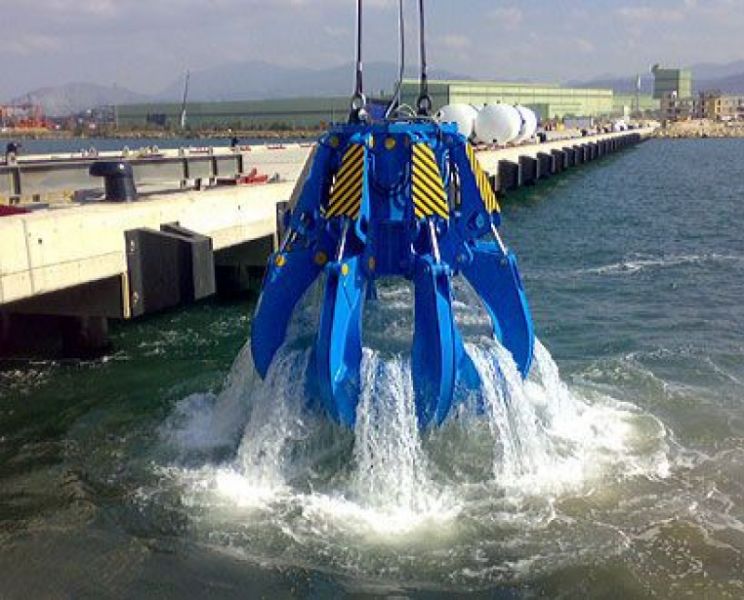
For example, in the case of offshore substations or platform decks, heavy modules are often pre-equipped with piping, cables, and control systems before transportation. Advanced lifting tools like remote-control grabs and hydraulic clamps are used during loading and unloading to handle materials safely and efficiently.
Transportation And Installation
Once fabrication is complete, transportation to the offshore site begins. This stage represents one of the most logistically challenging parts of any project. Massive components, often weighing thousands of tons, must be moved using semi-submersible barges or heavy-lift vessels. Timing is critical, installation can only proceed under favorable weather and sea conditions.
Specialized cranes and lifting attachments are then used to position and fix components with millimeter-level accuracy. Even slight misalignment during installation can cause severe structural stress once the system becomes operational. Companies like Güven Grab provide precision-engineered lifting solutions that help reduce risk and improve control during these high-stakes operations, especially in environments where reliability cannot be compromised.
Inspection, Maintenance, And Decommissioning
Once operational, offshore structures undergo rigorous and continuous inspection. Saltwater exposure, temperature fluctuations, and constant movement accelerate wear and fatigue. Regular maintenance schedules are therefore essential to extend service life and prevent catastrophic failure.
Modern inspection methods use remotely operated vehicles (ROVs), drones, and ultrasonic testing to detect early signs of corrosion or structural weakness. Predictive maintenance, powered by AI and sensor data, is now becoming standard practice.
Eventually, all offshore structures reach the end of their life cycle. Decommissioning involves safe dismantling, recycling of materials, and restoring the marine environment. Proper planning during the early design stages can simplify this process and reduce long-term costs.
Types Of Offshore Construction Projects
Offshore construction projects vary widely depending on purpose, location, and operating depth. While all share the common challenge of harsh marine conditions, each category involves distinct design philosophies, logistical methods, and safety requirements. Below are the most significant types of offshore construction projects shaping today’s global marine infrastructure.
Oil And Gas Platforms
Oil and gas platforms have long been the backbone of offshore construction. These massive installations are built to extract and process hydrocarbons beneath the seabed, often in extreme weather and water depths exceeding 2,000 meters.
Fixed platforms, anchored to the ocean floor with steel or concrete legs, are used in shallow waters, while floating production systems such as FPSOs (Floating Production Storage and Offloading units) dominate deepwater regions. Each type requires an immense amount of precision during assembly and installation, with cranes and grabs handling thousands of tons of piping, risers, and support structures.
The longevity of these platforms depends on durable materials and consistent maintenance routines. Hydraulic grabs, clamshells, and other heavy-lifting tools are often used during maintenance shutdowns for debris removal, pipeline lifting, and subsea module handling. These operations require robust, corrosion-resistant designs capable of functioning flawlessly under continuous load.
Offshore Wind Farms
Offshore wind energy has rapidly become one of the most dynamic fields within the sector. Each wind turbine installation involves foundations (monopiles, jackets, or floating bases), nacelles, blades, and subsea cables, all requiring precision engineering and lifting operations.
Wind farm construction demands tight coordination across multiple vessels: one installs foundations, another transports towers and blades, and a third lays electrical cables. Specialized grabs and lifting frames are used to load heavy components, minimizing downtime caused by high wind or rough seas.
The rise of floating wind farms is further revolutionizing the industry. These structures can be deployed in deeper waters where wind speeds are stronger and steadier, expanding the global potential for renewable offshore power generation.
Offshore Substations
An offshore substation acts as the heart of a wind farm, collecting electricity from multiple turbines and transmitting it to shore. These substations are massive, multi-deck platforms equipped with high-voltage transformers, switchgear, and control systems.
Their construction mirrors that of oil platforms but with higher emphasis on electrical integration and cooling systems. Each component, transformer units, busbars, and switch cabinets, must be securely lifted and installed with precision. Because even minor misalignment or vibration can impact performance, high-quality lifting attachments and stable grab systems are critical during assembly.
Offshore Desalination Plants
A newer but increasingly relevant segment, offshore desalination plants aim to convert seawater into potable water directly at sea. These floating or fixed installations reduce the need for extensive onshore infrastructure, making them ideal for coastal regions with limited land availability.
Their construction involves a combination of industrial modules: filtration systems, pipelines, energy recovery units, and storage tanks. Offshore handling systems, such as electro-hydraulic grabs, are often utilized during the loading and positioning of modular units to ensure safe, efficient installation in saline environments.
Offshore Pipelines
Offshore pipelines form the arteries of subsea energy transportation, carrying oil, gas, and sometimes even fresh water or hydrogen between offshore facilities and the mainland. The construction process includes seabed preparation, welding, inspection, and burial.
Pipe-laying vessels equipped with advanced tensioners and welding stations operate continuously, often around the clock. In shallow waters, mechanical grabs or crane-mounted clamps help position and secure pipe segments before lowering them. The accuracy and reliability of these handling tools directly affect the long-term stability of the pipeline network.
Artificial Islands
Artificial islands represent some of the most ambitious offshore construction feats in history. Built through large-scale dredging and reclamation, these islands serve as residential, commercial, or port infrastructure hubs.
Projects like Dubai’s Palm Jumeirah and The Pearl in Qatar demonstrate the potential of marine engineering when combined with geotechnical expertise. Constructing such islands requires millions of cubic meters of sand and rock, transported and compacted layer by layer. High-capacity hydraulic grabs, dredgers, and hoppers are essential in these large-scale material handling operations.
Key Players In Offshore Construction
The offshore construction industry operates on a global scale, driven by a handful of major companies that combine advanced engineering, logistics, and innovation. These firms lead multi-billion-dollar projects across oceans, setting standards for safety, efficiency, and sustainability. Their work influences every segment of offshore development, from oil extraction to renewable energy expansion, and often dictates the pace of technological progress in marine engineering.
Below is an overview of five key players that have shaped the modern offshore construction landscape.
| Company | Primary Focus | Notable Projects |
|---|---|---|
| Schlumberger | Integrated oilfield services, offshore drilling technologies, and subsea data systems | Deepwater exploration in the Gulf of Mexico and West Africa |
| Orsted | Offshore wind energy development and green infrastructure | Hornsea Project (UK) and Greater Changhua Wind Farm (Taiwan) |
| Subsea 7 | Subsea engineering, pipeline installation, and offshore construction support | North Sea gas field developments and Brazilian deepwater projects |
| Transocean | Ultra-deepwater drilling services and rig management | Discoverer Inspiration and Deepwater Titan operations |
| China Communications Construction Company (CCCC) | Marine infrastructure, dredging, and artificial island construction | Hong Kong-Zhuhai-Macau Bridge and port expansions in Southeast Asia |
Schlumberger
Schlumberger is one of the oldest and most influential service providers in offshore energy. Known for its advanced reservoir characterization and drilling technologies, the company delivers complete subsea systems that integrate sensors, control modules, and heavy-duty hardware. Its offshore construction support includes high-precision lifting and installation operations, often in deep-sea environments where equipment reliability is critical.”
Orsted
Transitioning from traditional energy to renewables, Orsted is now the global leader in offshore wind farm development. Its ability to coordinate large-scale turbine installation projects has set new efficiency benchmarks. Orsted’s use of specialized installation vessels and modular transport systems has significantly reduced construction time, demonstrating how advanced planning and reliable lifting tools can transform project economics.
Subsea 7
Subsea 7 focuses on engineering and installation of subsea pipelines, risers, and umbilicals. The company’s approach, combining ROVs, heavy-lift vessels, and subsea fabrication yards, allows it to execute highly complex projects efficiently. Its track record in harsh environments such as the North Sea underscores the importance of durable handling systems and real-time monitoring during offshore operations.
Transocean
As one of the pioneers in offshore drilling, Transocean operates some of the world’s most sophisticated rigs. These semi-submersible and drillship platforms function as mobile factories, requiring constant logistical support and maintenance. Offshore construction teams rely on precision handling systems to transport heavy tools, replace riser sections, and perform subsea repairs, all in dynamic sea conditions.
China Communications Construction Company (CCCC)
CCCC is a dominant force in marine infrastructure and dredging. Its portfolio includes some of the largest artificial islands, port terminals, and causeways ever built. The company’s offshore operations depend heavily on high-capacity grabs, dredgers, and lifting barges to move millions of cubic meters of material. CCCC’s rapid project execution reflects China’s expanding role in global offshore construction.
These industry leaders illustrate the vast diversity within offshore construction, each focusing on a specific expertise but united by the need for precision engineering, safe handling systems, and long-term operational efficiency.
Ensuring Worker Safety In Offshore Construction Projects
Safety is the defining pillar of every offshore construction operation. The environment itself, isolated, unpredictable, and often hundreds of kilometers from shore, creates risks that demand strong control measures. Unlike land-based worksites, offshore platforms and vessels operate as self-contained environments where even a minor incident can escalate quickly due to limited evacuation options and exposure to harsh weather.
Every company involved in offshore construction follows international safety standards such as ISO 45001, API RP 75, and the International Maritime Organization (IMO) codes. Yet, beyond compliance, operational culture determines real outcomes. A project’s success depends on how consistently safety practices are applied, not just documented.
Hazard Awareness And Risk Mitigation
Offshore projects operate in high-risk environments that combine electrical, mechanical, and marine hazards. Heavy lifting, welding, confined spaces, and high-voltage equipment are part of daily routines. Before any work begins, detailed risk assessments identify all potential hazards and mitigation steps.
Dynamic risk management, adjusting protocols based on weather changes or new operational data, is essential. For example, crane operations are immediately suspended when wind speeds exceed certain thresholds. Equipment such as radio remote control grabs adds another layer of protection, enabling operators to work at a safe distance from suspended loads.
Personal Protective Equipment (PPE) And Training
Worker protection begins with appropriate PPE: flame-resistant coveralls, anti-slip boots, flotation devices, and communication headsets. However, safety gear alone is not enough. Continuous training ensures personnel know how to respond to emergencies such as fire, flooding, or man-overboard incidents.
Many offshore projects require mandatory HUET (Helicopter Underwater Escape Training) and advanced first aid certifications. Training programs now use realistic simulations to mirror actual offshore conditions. These exercises help workers make fast, informed decisions under pressure. The focus is not only on reacting to incidents but also on preventing them by identifying unsafe conditions before accidents occur.
Emergency Preparedness And Communication
In an offshore environment, quick coordination can be the difference between a manageable incident and a serious emergency. Every facility follows a clear emergency response plan that outlines muster points, lifeboat assignments, and communication steps.
Modern offshore platforms rely on digital systems with alarms, cameras, and tools that show where people are at any moment. These systems help the control room stay in constant contact with teams working outside. Regular safety drills, including fire, evacuation, and medical response exercises, are held each week to keep everyone prepared.
Psychological And Physical Wellbeing
Life offshore is demanding. Workers spend weeks in confined environments, often rotating through long shifts in physically challenging conditions. Fatigue, stress, and isolation can reduce alertness and raise the chances of an accident.
Many companies now place greater importance on mental well-being and proper rest. Fatigue management plans, better living spaces, recreation rooms, and balanced shift schedules are becoming essential parts of offshore life. A healthy and well-rested workforce stays more focused, which reduces both human error and equipment-related issues.
Safety is not limited to one department. It is a shared responsibility shaped by good engineering, reliable equipment, and responsible behavior. Companies that invest in better lifting tools, proactive maintenance, and worker-focused designs not only prevent incidents but also create long-term operational strength.
How To Get Into Offshore Construction
Offshore construction offers some of the most challenging and financially rewarding career paths in engineering. It attracts people who enjoy working in fast-paced, high-responsibility environments where problem-solving, teamwork, and accuracy directly influence a project’s outcome. However, entering this field requires more than enthusiasm. It calls for a mix of technical knowledge, the right certifications, and the ability to work comfortably in remote conditions.
Educational Background And Technical Skills
Most professionals in offshore construction come from civil, mechanical, marine, or electrical engineering backgrounds. For field technicians and operators, vocational training in welding, hydraulics, rigging, or crane operation provides a solid starting point. More companies now prefer candidates with broad skill sets, especially those who can understand both mechanical systems and digital monitoring tools.
Skills in CAD design, structural analysis, and project management programs such as Primavera or AutoCAD Plant 3D are highly valued. For those working in day-to-day operations, familiarity with offshore lifting equipment, including grabs, winches, and A-frame systems, adds meaningful strength to their role.
Certifications And Compliance
Working offshore requires compliance with strict international safety and technical standards. Commonly required certifications include:
- BOSIET (Basic Offshore Safety Induction and Emergency Training): A fundamental safety program covering firefighting, sea survival, and helicopter escape procedures.
- HUET (Helicopter Underwater Escape Training): Mandatory for personnel traveling by helicopter to offshore sites.
- H2S Awareness: Training for recognizing and responding to hydrogen sulfide gas exposure, a common risk in oil and gas operations.
- Offshore Crane Operator or Rigging Certification: For professionals engaged in heavy lifting and handling operations.
For engineers, membership in professional organizations such as the Society for Underwater Technology (SUT) or the International Marine Contractors Association (IMCA) also enhances credibility.
Entry-Level Roles And Career Progression
Those entering the industry can start in supporting positions such as offshore technician, assistant engineer, or safety officer. From there, experience leads to more specialized roles in structural design, subsea installation, or marine logistics. Senior professionals may later move into project management, inspection coordination, or technical consultancy.
Because offshore construction projects take place around the world, mobility often becomes part of career development. Professionals may rotate between regions such as the North Sea, the Gulf of Mexico, or Southeast Asia, depending on project needs. Adaptability, clear communication, and leadership are therefore just as important as technical ability.
Working Conditions And Compensation
Offshore work typically follows rotational schedules, for example 28 days offshore followed by 28 days onshore rest. These rotations help workers maintain long-term health and balance, although the offshore environment remains physically demanding. Pay reflects these conditions, as salaries and benefits are usually higher than comparable onshore roles.
Many companies now offer internet access, fitness areas, and upgraded living spaces to improve daily life for crews at sea. These improvements have helped attract a new generation of engineers and technicians who value both career growth and a manageable work-life rhythm.
A Gateway To Global Engineering
Offshore construction is more than just a job. It is a doorway into a global network of innovation and infrastructure. Whether contributing to a floating wind farm, a subsea cable network, or a desalination plant, each project gives professionals the chance to leave a lasting impact on industries shaping the future of energy and sustainability.
For companies like Güven Grab, whose technologies support these heavy lifting operations, the offshore sector remains a place where strong engineering and practical problem-solving come together.
Future Trends In Offshore Construction
The offshore construction industry is entering a period of major change. With the global shift toward cleaner energy, growing use of digital tools, and rising sustainability targets, companies are rethinking how projects are designed, built, and maintained at sea. An industry once centered mainly on oil platforms is now expanding into renewable energy, smart infrastructure, and more automated ways of working.
New technologies are helping reduce cost and risk, while tighter environmental rules are encouraging cleaner and safer approaches. Below are some of the key trends influencing the future of offshore construction.
Expansion Of Renewable Offshore Projects
The offshore wind sector is expected to lead new construction investments in the coming years. Floating wind farms, which are secured to the seabed with mooring lines instead of fixed foundations, make it possible to place turbines in deeper waters where wind speeds are stronger and more stable.
Hybrid systems that combine wind, wave, and solar power are also becoming more common. They help maintain energy production even when one source is low, reducing downtime and improving overall efficiency.
For manufacturers and service providers, including companies that supply grabs and lifting equipment, these developments create new opportunities. There is growing demand for corrosion-resistant, lightweight, and modular systems that can support the needs of hybrid offshore platforms.
Automation And Remote Operations
Digital transformation is changing the way offshore projects are built and monitored. Remote-controlled cranes, automated welding systems, and robotic inspection drones are reducing the need for workers to enter high-risk areas.
Digital twins, which are virtual models of offshore structures, allow engineers to track performance, test maintenance plans, and spot potential issues before they develop. When paired with IoT sensors and data analysis tools, these systems offer real-time information about structural health, load behavior, and overall efficiency.
In the coming years, fully autonomous installation vessels and remote-operation control centers may reshape how offshore construction is carried out. These advances could lower costs while greatly improving worker safety.
Advanced Materials And Modularization
New material technologies are improving the durability and performance of offshore assets. High-performance composites, carbon-fiber reinforcements, and self-healing coatings help reduce corrosion and fatigue-related failures. Lighter materials also lower transport and installation costs, which is especially important in deepwater environments.
At the same time, modular construction is becoming more common. Prefabricated units, such as substation decks or turbine platforms, are built onshore in controlled settings and then assembled offshore. This approach reduces weather-related delays and improves overall quality.
For equipment suppliers, modular construction brings new requirements. Handling tools like hydraulic grabs, clamps, and spreader systems must be more adaptable and more precise, capable of managing preassembled units in many different sizes and shapes.
Sustainability And Environmental Stewardship
As offshore development grows, environmental responsibility has become essential. Governments and regulatory agencies now expect detailed environmental impact assessments before approving new projects.
Modern offshore construction includes practices that aim to reduce ecological impact, such as limiting seabed disturbance, choosing biodegradable lubricants, and improving fuel efficiency. Approaches to end-of-life planning are also changing. Platforms are being recycled, subsea components are being reused, and in some cases old oil rigs are transformed into artificial reefs.
This shift toward sustainability is also changing how companies choose suppliers. Many operators now look for partners who can show responsible sourcing, clear plans for lowering emissions, and strong alignment with ESG (Environmental, Social, and Governance) standards.
Collaboration And Globalization
Offshore construction projects are rarely managed by a single organization. International collaboration has become the norm, with design, fabrication, and installation often carried out in different countries. Digital platforms now help teams work together across time zones, improving clarity and speeding up decision-making.
This growing collaboration highlights the need for more consistency in equipment and procedures. Whether a project is in the North Sea or the South China Sea, contractors want lifting systems that work across regions, shared safety standards, and certifications that are recognized worldwide. This creates both opportunities and pressure for manufacturers to keep advancing their products.
Offshore construction’s future will be shaped by adaptability. As the world shifts toward renewable energy and smarter marine infrastructure, the companies that combine strong engineering with effective digital tools will set the pace. The next generation of offshore projects will not only be larger and more complex, but also cleaner, safer, and more sustainable.
Conclusion
Offshore construction stands as one of humanity’s most ambitious engineering frontiers, a field that continually pushes the limits of what can be achieved in harsh marine environments. From oil platforms and wind farms to desalination plants and artificial islands, each project represents a blend of technical skill, careful planning, and environmental awareness. The challenges are significant, but so are the rewards: energy security, sustainable development, and the growth of global infrastructure across the world’s oceans.
As the industry moves forward, the need for dependable and efficient handling systems will become even more important. Offshore construction sites rely on equipment that performs without fail, even under intense pressure. They depend on tools capable of moving and securing heavy materials with accuracy despite rough conditions. Güven Grab’s lifting technologies, built for demanding maritime use, fit naturally into this environment. Their consistent performance supports safer operations, reduces delays, and offers greater control, all of which align with the high standards of offshore work.
- Looking ahead, the combination of renewable energy, automation, and smarter monitoring will guide the future of offshore construction. Companies that adapt to this shift, bringing together strong mechanical solutions with forward-thinking digital tools, will lead the way. What was once an industry focused mainly on oil and gas is now becoming a cornerstone of the emerging green economy.
Table of Contents