Types of Crane Grabs Used in Modern Material Handling

In today’s industrial environment, precision and load security influence not only operational speed but also overall profitability. Ports, terminals, scrap yards, and construction sites increasingly rely on advanced material handling equipment to meet growing throughput demands. Within these systems, crane grabs play a critical role by determining how efficiently bulk cargo and irregular materials are lifted, transported, and discharged.
Understanding the differences between grab types is no longer a theoretical discussion. It has become a practical necessity for operators who want to reduce cycle times, lower energy consumption, and extend the service life of their equipment. Each grab design offers specific advantages based on its mechanical structure, closing force, and compatibility with particular crane systems. When the right grab is selected, operations achieve greater consistency, which directly improves workflow stability and overall return on investment.
Types Of Crane Grabs Used In Bulk And Scrap Material Handling
Crane grabs are produced in multiple configurations because no single design performs equally well across all material types. Bulk cargo behaves very differently from scrap metal, while dredging operations place entirely different demands on equipment than timber yards. As a result, the material handling industry has developed a wide range of grab designs, each intended to solve a specific operational challenge. The engineering behind these variations is shaped by factors such as available crane power, required closing force, material density, and the frequency of loading cycles.
Understanding these differences enables engineers and procurement teams to select equipment that supports the crane rather than restricting its performance. A properly matched grab improves loading efficiency, reduces unnecessary mechanical stress on the crane, and delivers a clear increase in cargo throughput. As operations expand and ports continue to modernize, choosing the right grab type becomes a strategic advantage rather than a routine equipment decision.
How Crane Grab Types Affect Efficiency And Cost
Different grab designs influence operational performance in very real ways. Electro hydraulic models deliver strong closing force, making them well suited for dense or heavy materials. Mechanical rope grabs offer a simpler and highly reliable solution, particularly in locations where electrical infrastructure is limited or unavailable. Radio remote control systems remove the need for crane mounted hydraulics and help reduce swing movements, resulting in smoother and more controlled discharge cycles during bulk handling.
Even small differences in jaw geometry or rope configuration can have a noticeable impact on fuel consumption, loading speed, and maintenance frequency. When decision makers assess grab types with these practical factors in mind, total handling costs decrease while overall performance improves.
Radio Remote Control Grab
Radio Remote Control Grabs have become a preferred solution in modern bulk cargo handling because they remove the need for external hydraulic power, electrical wiring, or drum systems on the crane. Their internal battery driven mechanism controls the opening function, while the closing action occurs naturally through the crane’s hoisting motion. This self contained design simplifies installation and allows the grab to operate efficiently on almost any ship crane or mobile harbor crane. As ports look for equipment that reduces downtime and speeds up vessel turnaround, Radio Remote Control technology offers a practical and flexible solution.
Key Operating Principles And Advantages
The operating logic of a Radio Remote Control Grab is deliberately straightforward. The grab closes when the crane lifts and opens only when the operator sends a command through the remote control. This approach limits unnecessary cycling and gives operators greater control when handling materials such as grain, coal, soda ash, fertilizers, and other free flowing bulk products. The internal system is designed to open smoothly and without sudden movement, which helps protect the crane structure and improves accuracy when discharging into hoppers or conveyor systems. Since the grab does not rely on hydraulic hoses or external power supplies, maintenance requirements are significantly lower than those of conventional hydraulic systems.
Common Use Cases In Bulk Handling
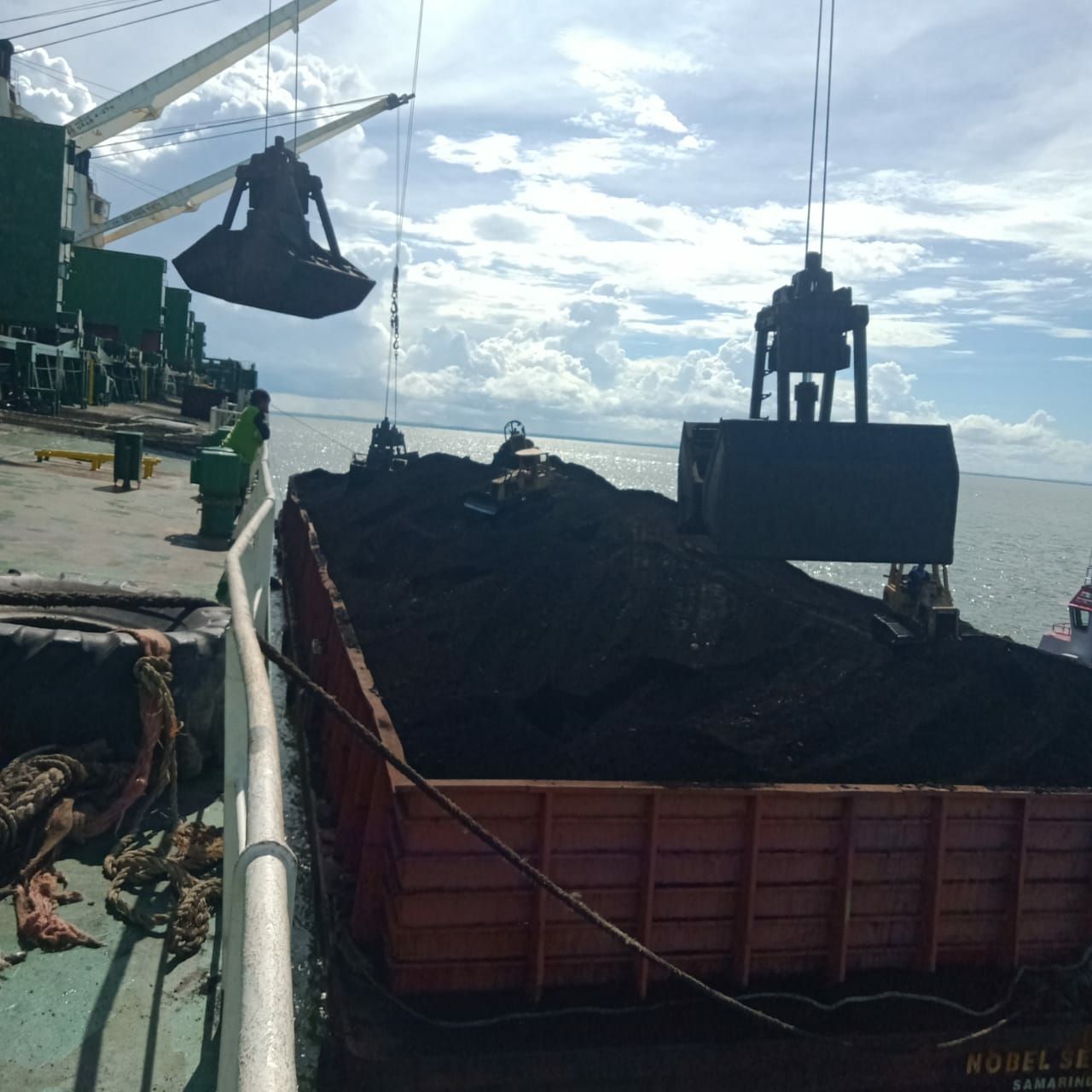
Radio Remote Control Grabs are commonly used on bulk carriers where fast and consistent unloading is essential and equipment setup time must be kept to a minimum. Many vessel operators favor this design because it requires no crane modification and maintains reliable performance under frequent cycling and changing load conditions. Terminals and stevedoring companies also benefit from the grab’s stable handling behavior, as reduced swing leads to safer operations and shorter discharge times. Whether used for grain at agricultural terminals or for coal and iron ore in industrial ports, this grab type delivers dependable performance through a simple and efficient operating approach.
Electro Hydraulic Clamshell Grab
Electro Hydraulic Clamshell grabs are designed for applications where strong closing force and consistent penetration into dense bulk materials are required. Unlike mechanical systems that depend entirely on rope coordination, these grabs are equipped with an integrated hydraulic power pack. This built in system allows the grab to maintain full hydraulic pressure throughout the closing motion, resulting in deeper penetration and more uniform material capture. Facilities handling minerals, aggregates, clinker, fertilizers, or other medium to high density bulk cargo benefit from the stability and controlled force offered by this design.
Performance With High Density Bulk Cargo
The key performance advantage of an Electro Hydraulic Clamshell Grab lies in its ability to sustain constant hydraulic pressure during closure. This consistency helps prevent partial filling, reduces spillage, and increases the load carried in each cycle, which directly improves overall throughput. When handling compact or heavy materials, the hydraulic force allows the grab to penetrate effectively even in tightly packed cargo conditions.
The precision of the clamshell geometry also supports cleaner discharge into hoppers or conveyor systems, which helps minimize blockages and improves downstream efficiency. For ports managing continuous high volume operations, this level of control and reliability leads to fewer interruptions and more predictable cycle times.
Electro Hydraulic Orange Peel Grab
Electro Hydraulic Orange Peel Grabs are built for handling irregular, abrasive, and high impact materials where controlled penetration and strong gripping force are essential. Their multi jaw structure allows them to surround and secure uneven loads such as scrap metal, loose rock, demolition debris, municipal waste, and other difficult materials. The integrated hydraulic power unit supplies continuous closing pressure, enabling each jaw to move independently and adapt to the shape of the load. This balance of flexibility and force makes the electro hydraulic configuration a preferred choice in scrap yards, steel mills, recycling facilities, and heavy industrial environments.
Blade Configuration And Force Distribution
Jaw geometry has a direct impact on how an orange peel grab performs. Four jaw designs allow faster penetration for general scrap handling, while five and six jaw versions increase surface contact and improve control when working with fragmented or finer materials. Since each jaw is hydraulically powered, closing force is distributed evenly around the load, which reduces slippage and improves filling efficiency.
Hardened wear plates and reinforced structural elements on the jaws help the grab withstand continuous abrasion. By maintaining balanced force distribution throughout each operating cycle, an Electro Hydraulic Orange Peel Grab delivers reliable performance even in demanding and unpredictable loading conditions.
Mechanical Clamshell Two Roped Grab And Four Roped Grab
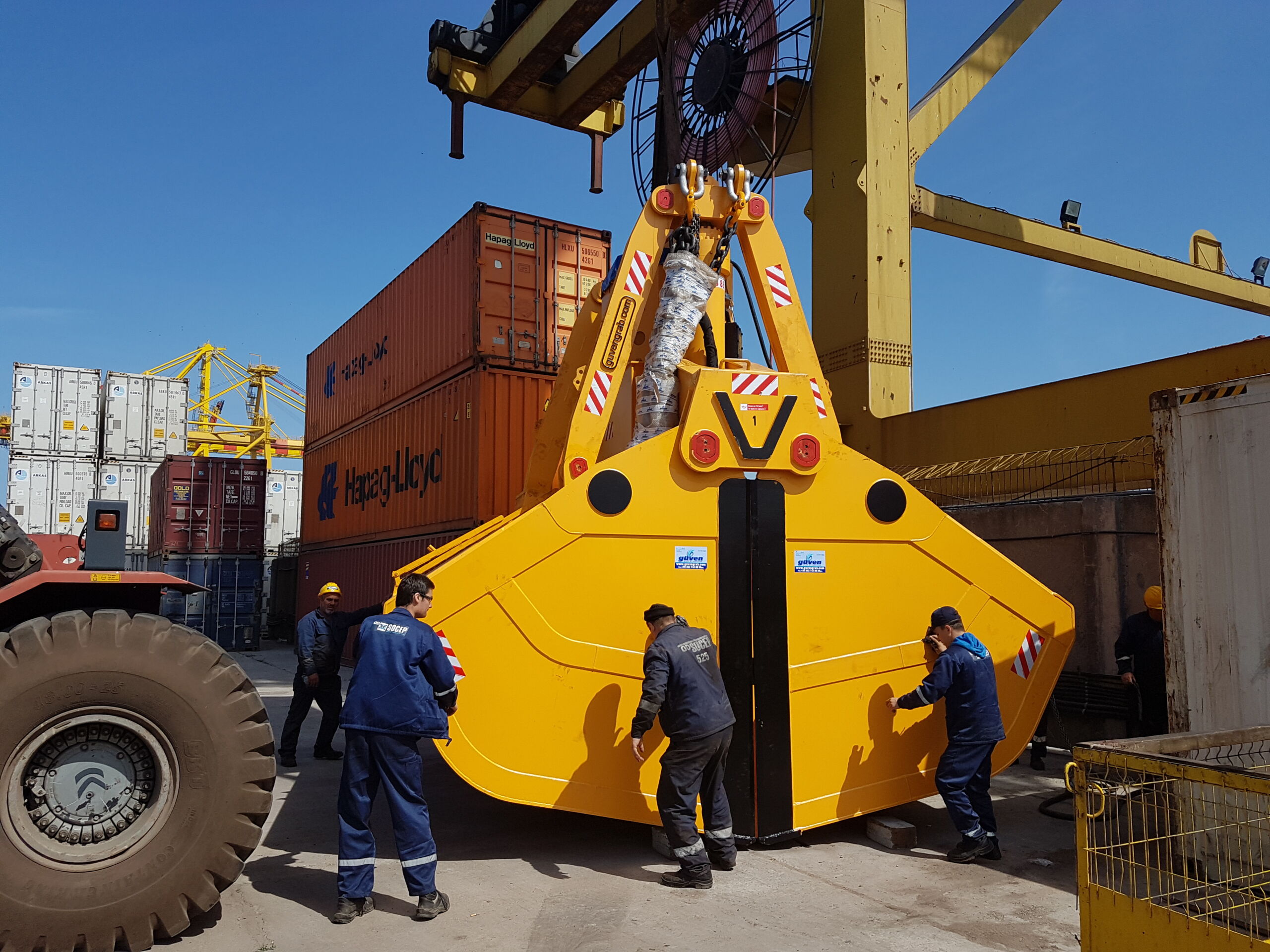
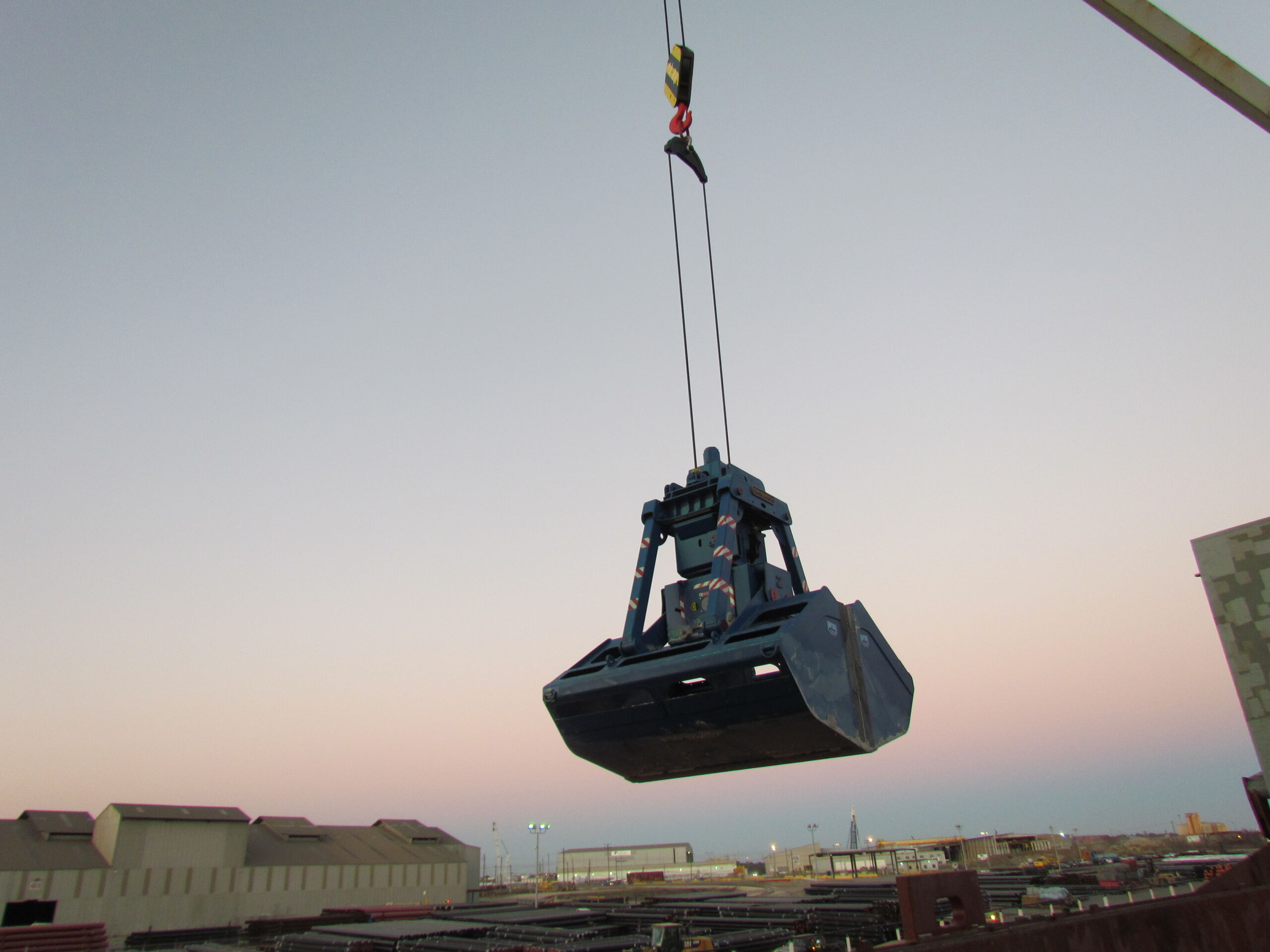
Mechanical Clamshell Grabs remain a widely trusted solution in bulk handling environments where simplicity, reliability, and high cycle frequency are priorities. These grabs operate through a rope driven system and do not require electrical or hydraulic power. Opening and closing actions are controlled entirely by the crane’s hoisting and lowering movements. Two roped versions are commonly used on general purpose cranes, while four roped models provide improved control and smoother operation on cranes designed specifically for grab handling. For ports that require durable equipment capable of continuous operation with low maintenance demands, mechanical clamshell grabs offer a dependable and cost effective solution.
Operational Simplicity And Reliability
The reliability of mechanical clamshell grabs comes from their straightforward operating principle. The crane’s rope system controls both lifting and opening functions, which limits the grab to essential mechanical components only. With fewer systems involved, maintenance requirements remain low and downtime is reduced. These grabs are well suited for handling materials such as coal, grain, sand, fertilizers, and other free flowing bulk cargo.
Four roped configurations provide additional stability and help the grab maintain proper alignment during opening and closing. This improves filling consistency and reduces material loss during handling. In facilities where continuous operation is required and access to external power infrastructure is limited or unavailable, mechanical clamshell grabs deliver consistent performance and withstand long term demanding use.
Mechanical Orange Peel Two Roped Grab And Four Roped Grab
Mechanical Orange Peel Grabs are built for heavy duty environments where irregular, abrasive, or fragmented materials must be handled continuously without dependence on hydraulic or electrical systems. Their multi jaw configuration allows them to capture scrap metal, construction debris, waste materials, and coarse aggregates with a stable and secure grip. Two roped versions perform effectively on general purpose cranes, while four roped models provide improved control, smoother opening, and better balance during high frequency operations. Their durable construction and low maintenance design make them a reliable choice in scrap yards, steelworks, and waste handling facilities.
When Mechanical Systems Outperform Hydraulic Systems
In certain operating conditions, mechanical orange peel grabs can outperform hydraulic alternatives, particularly where simplicity and robustness are valued over fine control. Facilities exposed to heavy dust, corrosion, or continuous abrasive contact often benefit from mechanical systems because they include fewer components that are vulnerable to damage. Four roped designs enhance jaw synchronization and reduce twisting during the closing cycle, which leads to more consistent filling and lower material loss.
When energy availability is limited or site conditions are especially harsh, mechanical orange peel grabs maintain steady performance with minimal intervention. For long term operations focused on reliability and cost control, this makes them a strong and practical investment.
Hydraulic Excavator Orange Peel Grab
Hydraulic Excavator Orange Peel Grabs are designed specifically for excavator based material handling where precision, maneuverability, and strong gripping force are required. These grabs connect directly to the excavator’s hydraulic system, giving operators accurate control over every movement. Their multi jaw structure allows secure handling of scrap metal, waste materials, demolition debris, and other irregular loads. Because the excavator supplies both mobility and hydraulic power, this configuration is commonly used in recycling yards, transfer stations, steel mills, and construction sites where work must be carried out efficiently in confined or uneven areas.
Rotator Integration And Precision Handling
A key advantage of excavator mounted orange peel grabs is the ability to integrate high quality rotators such as Indexator units. A rotator provides full 360 degree continuous rotation, allowing operators to position, sort, and place materials with a high level of control. This precision shortens cycle times and supports more selective handling, which is particularly important in scrap sorting and demolition operations.
The excavator’s hydraulic system supplies stable and consistent closing force, while reinforced jaws and wear resistant plates help ensure long service life under demanding conditions. When mobility and precise control need to work together, hydraulic excavator orange peel grabs offer a flexible and effective solution for modern material handling tasks.
Radio Remote Control Orange Peel Grab
Radio Remote Control Orange Peel Grabs combine the adaptability of multi jaw scrap handling geometry with the flexibility of a self contained, remotely controlled opening system. This design eliminates the need for hydraulic hoses or electrical connections from the crane, allowing the grab to operate on a wide range of lifting equipment without modification. The jaws close through the crane’s lifting motion, while the wireless remote control activates the opening mechanism. This operating concept is particularly effective when handling materials such as rock, scrap, or heavy waste streams in environments where access to energy is limited or fast operation is required.
Suitable Applications And Technical Considerations
This grab type is widely used on barges, offshore loading points, and ship cranes where operators require a reliable system that functions independently from the vessel’s power supply. Remote activation allows precise and controlled opening, even when the grab is positioned over confined areas such as hoppers or transfer points. Reinforced jaw structures and abrasion resistant wear plates help the grab endure repeated impact from coarse and irregular materials.
Careful weight distribution and frame geometry are designed to reduce swing, which improves positioning accuracy during loading and unloading cycles. For operators seeking the gripping strength of an orange peel grab without the added complexity of hydraulic systems, the Radio Remote Control configuration provides a practical and efficient solution.
Mechanical Clamshell Touch Down Grab
Mechanical Clamshell Touch Down Grabs are designed for operations where automatic closing is required the moment the grab contacts the material. This design removes the need for manual timing or operator controlled release actions. Instead, the grab begins its closing cycle immediately upon contact with the cargo, using a self activating mechanical system that responds to downward pressure and rope tension. This touch down function is especially valuable in high throughput environments where cycle speed and consistency have a direct impact on operational efficiency. Ports and industrial facilities handling free flowing bulk materials often use this grab type to simplify and accelerate repetitive loading tasks.
How Touch Down Mechanisms Improve Cycle Speed
The touch down mechanism limits operator involvement by ensuring the grab closes as soon as it reaches the material surface. This reduces the time between positioning and lifting, which results in faster and more consistent cycles. The system is engineered to maintain structural strength while allowing the touch activated trigger to operate reliably under continuous use.
As each cycle becomes more predictable, variation in fill levels is reduced and overall cargo throughput improves. These gains are particularly noticeable during vessel unloading or hopper feeding operations, where thousands of cycles may be completed in a single shift. The straightforward mechanical design also keeps maintenance requirements low, making the touch down clamshell grab a practical solution for continuous bulk handling applications.
Mechanical Orange Peel Touch Down Grab
Mechanical Orange Peel Touch Down Grabs are designed for handling irregular, abrasive, or fragmented materials in operations where speed and reliability are equally important. Their multi jaw structure allows them to surround and secure uneven loads such as scrap metal, municipal waste, demolition debris, and other non uniform materials. What sets this grab apart from standard mechanical orange peel designs is its automatic closing function. The grab starts closing as soon as it makes contact with the material, which reduces operator involvement and creates a faster and more consistent workflow during repetitive loading tasks.
Durability And Application Fields
This grab type is built to withstand continuous impact and abrasive forces. For this reason, the jaws, pivot points, and main frame are reinforced with durable structural elements and wear resistant plates. The touch down mechanism is engineered to operate reliably in demanding environments where dust, corrosion, or heavy debris are common.
Facilities such as scrap yards, recycling centers, waste transfer stations, and demolition sites value the balance of speed and durability this grab provides. By reducing manual timing and simplifying each operating cycle, the Mechanical Orange Peel Touch Down Grab increases loading efficiency while maintaining long service life in harsh working conditions.
Dredging Facility Grabs
Dredging Facility Grabs are specialized tools designed for operations where material must be excavated from riverbeds, seabeds, or underwater construction areas. These grabs operate under conditions that are far more demanding than standard bulk handling. Water resistance, increased material density below the surface, and the abrasive nature of gravel, silt, and sediment require a design that is considerably stronger and more stable than conventional clamshell or orange peel grabs. Since dredging projects often run continuously over extended periods, the equipment must maintain structural strength while delivering consistent penetration and dependable discharge.
Why Dredging Grabs Require Higher Structural Strength
The underwater environment places unique stress on dredging grabs during both penetration and lifting. When the jaws enter submerged material, they must overcome resistance caused by water pressure and compacted sediment layers. To handle these forces, dredging grabs are built with reinforced ribs, thicker shell plates, and high grade steel that can endure repeated impact. Pivot points and hinge assemblies are engineered to handle heavy torsional loads, while wear resistant materials protect surfaces exposed to constant abrasion.
The added weight of the grab also supports effective penetration by helping it sink into the sediment. Because dredging operations often take place in remote or offshore locations, reliability becomes especially critical. A well engineered dredging grab minimizes unexpected downtime and improves overall productivity in maritime construction and maintenance projects.
Timber And Log Grab
Timber And Log Grabs are designed specifically for forestry operations and industries that handle long, cylindrical, or irregular wooden materials. Their frame geometry is engineered to secure logs firmly while minimizing surface damage during lifting, stacking, and loading. These grabs are commonly mounted on excavators, loaders, or stationary cranes in sawmills, timber yards, pulp mills, and biomass facilities. Because timber varies widely in diameter, surface texture, and moisture content, the grab must provide both flexibility and stability in every cycle to ensure safe and efficient handling.
How Log Geometry And Surface Contact Shape The Design
The curved arm profile of a timber grab is a functional requirement rather than a visual choice. It determines how the jaws wrap around the log and how pressure is distributed across its surface. Proper curvature helps keep the log centered and stable, even when it is lifted at an angle. Contact surfaces are designed to reduce slipping, particularly when working with freshly cut or wet timber.
Reinforced pins and bushings support repeated heavy loads, while the overall structure is designed to limit torsional stress during long term operation. This balance between geometry and structural strength allows timber grabs to perform reliably in fast paced forestry environments where safety and productivity must be maintained at all times.
Selecting The Right Grab For Bulk Cargo Operations
Choosing the correct grab type is more than a matter of preference. It is a decision that directly affects efficiency, safety, and the overall cost structure of bulk handling operations. Different materials behave in different ways during lifting, and each crane comes with specific limits related to power, rope configuration, and load capacity. When these factors are not aligned with the selected grab, operations often experience slower cycles, increased wear, and avoidable downtime.
When the grab is properly matched to both the material profile and the crane system, performance improves noticeably. Throughput increases, equipment stress is reduced, and long term reliability becomes easier to maintain.
Practical Checklist For Engineers And Procurement Teams
The following considerations help decision makers assess grab suitability in a structured way and reduce the risk of costly mismatches:
- Crane capacity and rope configuration should align with the grab’s operating weight and mechanical requirements.
- Material characteristics such as density, moisture content, particle size, and flow behavior influence whether a hydraulic or mechanical system is more suitable.
- Power availability determines whether hydraulic, electro hydraulic, or radio remote control systems can be used effectively.
- Target cycle time and daily throughput goals help define whether precise control or rapid repetitive cycling is the priority.
- On site maintenance capability affects the choice between more complex hydraulic systems and simpler rope driven designs.
- Environmental conditions including corrosion, dust, and abrasion must be considered to ensure long service life.
By evaluating these factors early in the procurement process, ports and industrial operators can choose equipment that supports operational performance rather than restricting it. A well selected grab becomes a long term asset that enables stable, predictable, and efficient material flow.
How the Right Crane Grab Supports Long Term Performance
Selecting the correct crane grab is a strategic decision that directly influences how efficiently and safely materials move through an operation. Each grab type, whether a rope driven mechanical design, a high power electro hydraulic system, or an advanced radio remote control unit, offers specific engineering advantages. When these strengths are properly aligned with the crane’s capabilities and the characteristics of the material being handled, operations benefit from faster cycles, reduced mechanical wear, and more consistent performance.
In industries where every vessel call, production shift, and loading cycle affects profitability, dependable material handling equipment becomes a critical factor for long term success. By understanding the distinct roles of each grab type and applying that knowledge to real operational conditions, decision makers can select equipment that supports both current requirements and future growth.
With decades of experience in designing and manufacturing specialized grab solutions, Güven Grab continues to support ports, terminals, and industrial operators worldwide by delivering equipment that enables safer, faster, and more efficient material handling operations.
Table of Contents