Shaping The Future Of Port Logistics Trends And Innovations
Global port logistics is entering a period of rapid transformation driven by rising cargo volumes, stricter environmental expectations, and an industry wide need for stronger operational resilience. Every port, whether a bulk terminal or a multi purpose facility, is now measured by one core standard: how efficiently it can move cargo between ship and shore. In this environment, handling equipment becomes much more than a mechanical tool. It becomes a strategic asset that directly influences competitiveness.
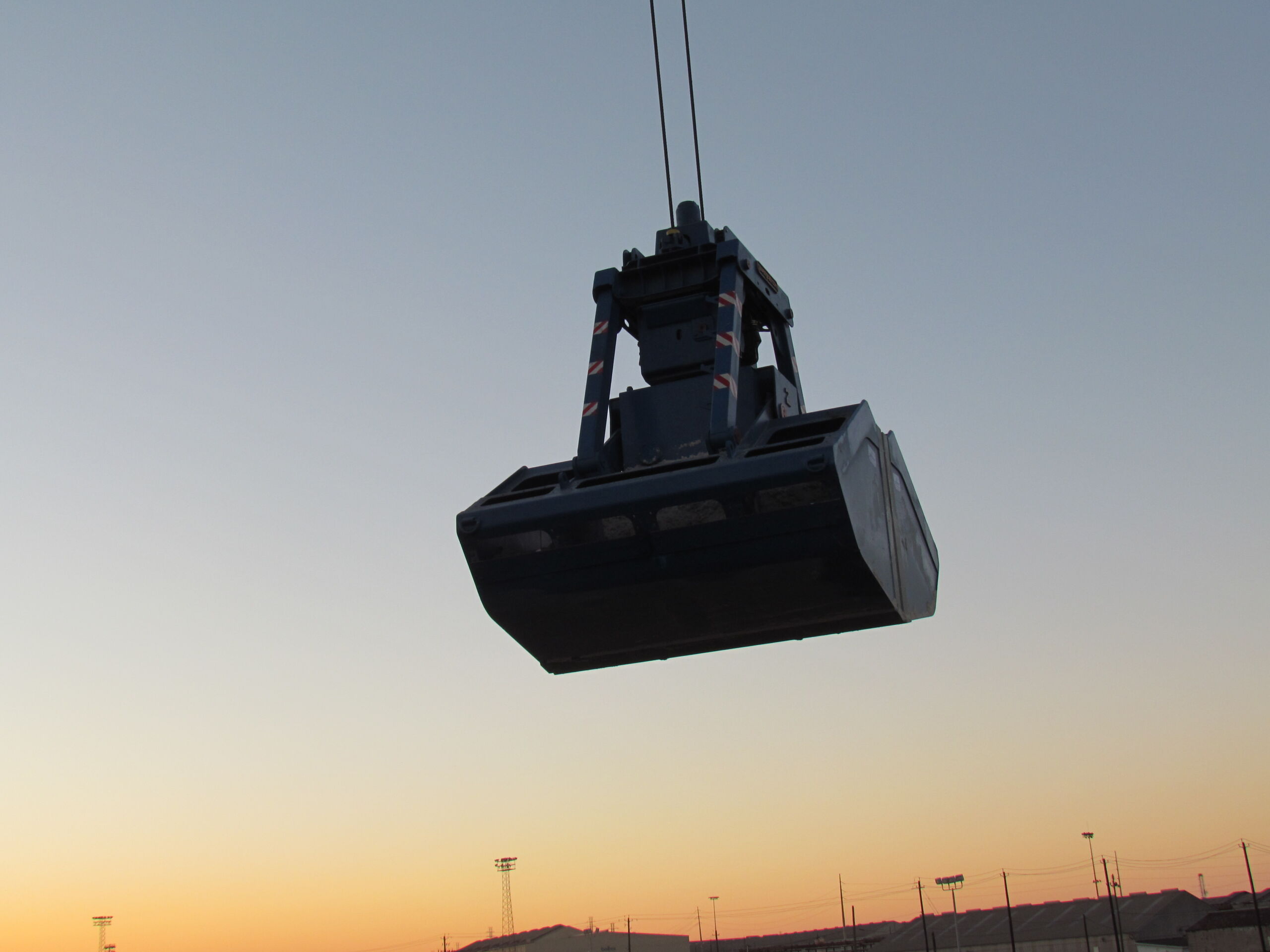
At the center of this shift are advanced grab systems designed for continuous, heavy duty cycles. As vessels grow larger and cargo densities become more demanding, ports can no longer afford inefficiencies, performance gaps, or unplanned downtime. Modern port grabs therefore play a critical role in shaping the pace, reliability, and sustainability of daily operations.
The following sections explore the emerging trends, technological innovations, and strategic developments that will shape the future of port logistics, along with the essential role that equipment manufacturers such as Güven Grab continue to play in this evolving landscape.
Shore To Ship And Ship To Shore Handling Facilities
Modern ports are rethinking how cargo moves between vessels and terminals as global trade patterns shift and operational demands intensify. Shore to ship and ship to shore handling systems must now deliver higher throughput, faster turnaround time, and greater adaptability to different cargo types. For many terminals, this requires a combination of infrastructure upgrades and more capable material handling equipment that can sustain performance under continuous operation.
Evolving Infrastructure Requirements
Ports are under pressure to modernize quay structures, crane capacities, and yard layouts to accommodate larger vessels and tighter cargo schedules. Bulk terminals in particular are redesigning operational zones to shorten travel distances and streamline each stage of loading and unloading. These improvements are only effective when paired with grab systems engineered to match the mechanical limits and duty cycles of the cranes operating above them.
Demand For High Capacity Handling Equipment
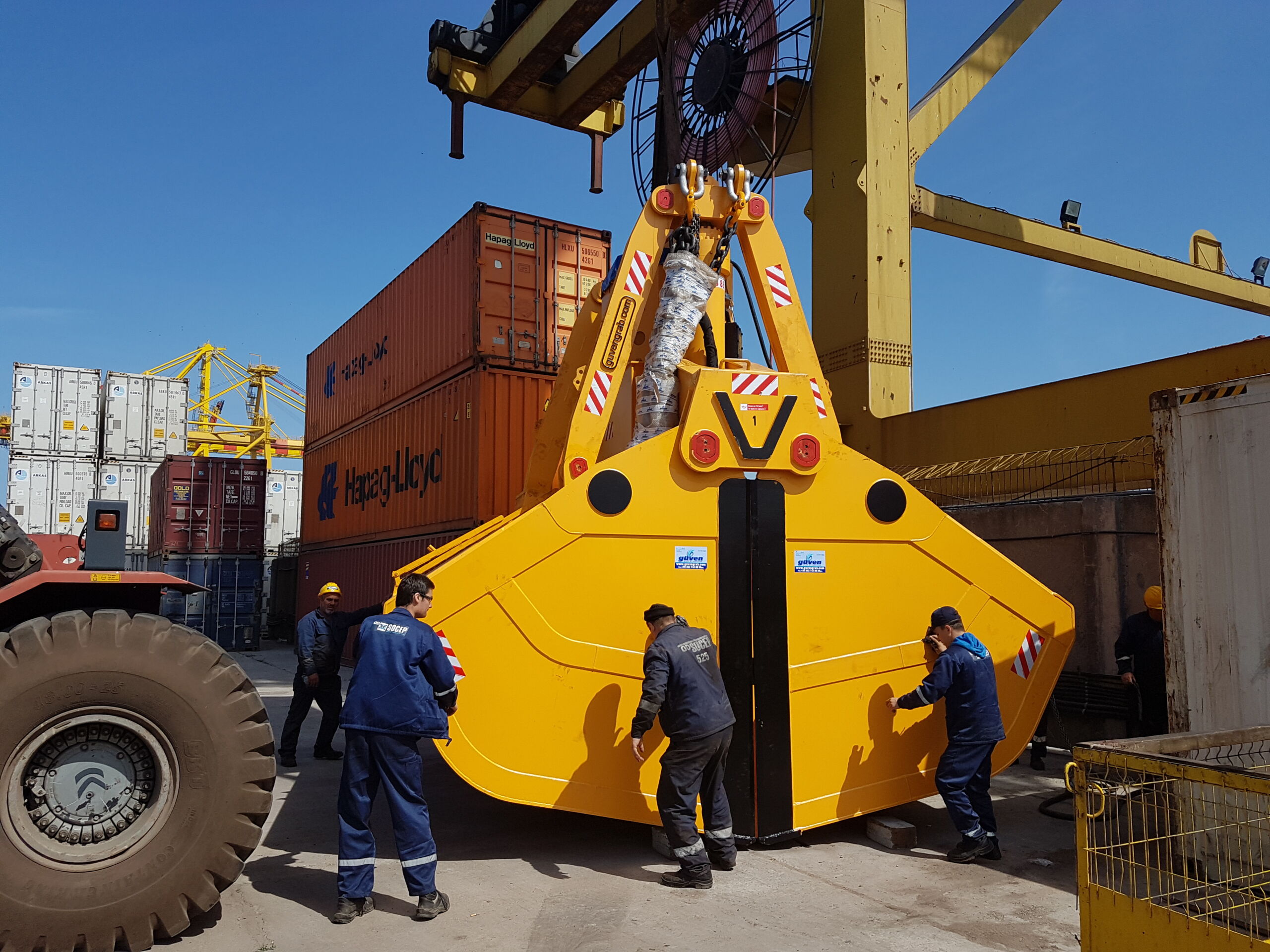
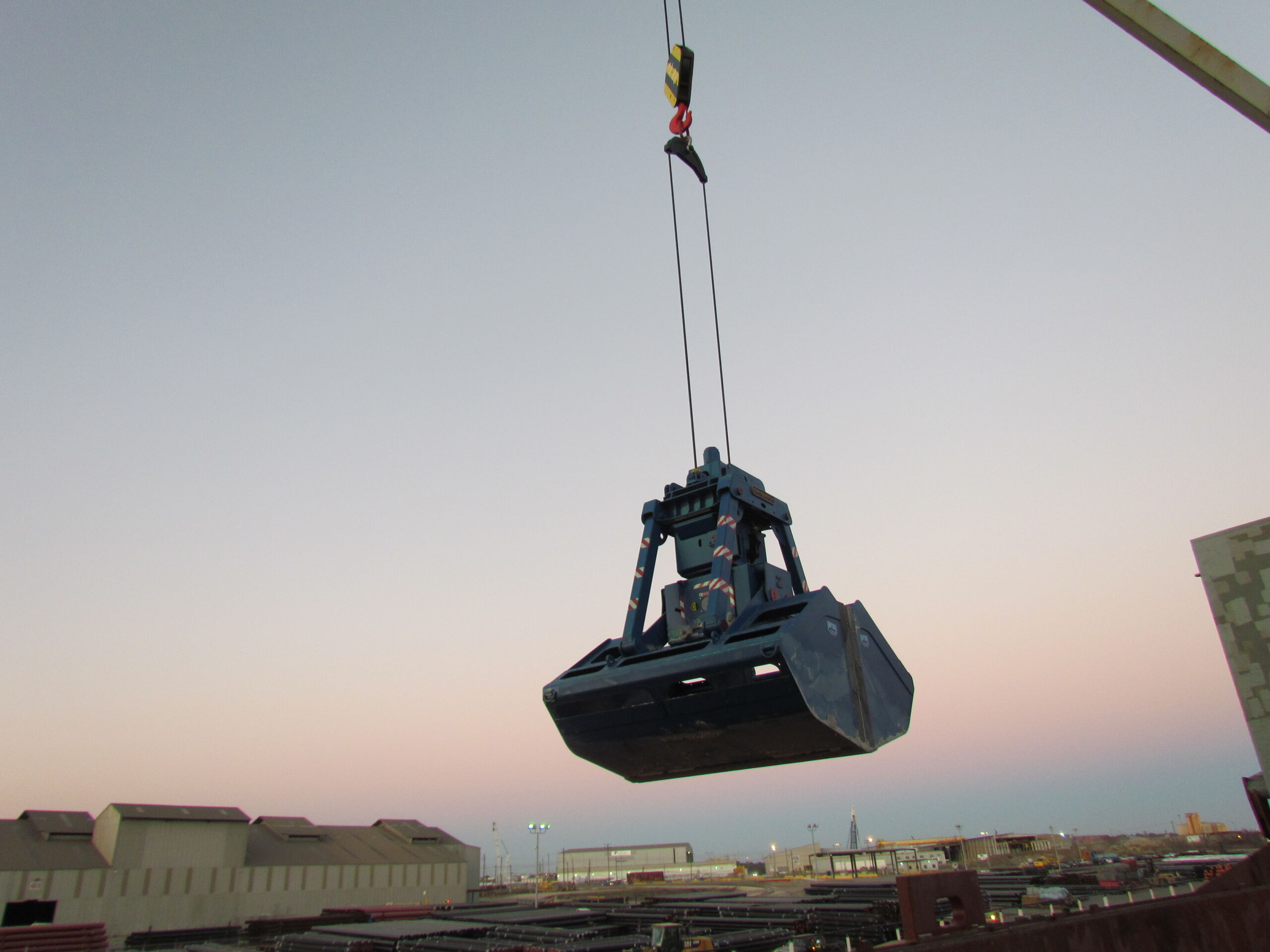
Terminal operators now expect equipment that can maintain consistent cycle times throughout long shifts while handling materials that range from grain to iron ore. High capacity clamshell and orange peel grabs play a key role in meeting these expectations because they combine volumetric efficiency with strong closing forces. When integrated with ship cranes or shore based cranes, they support predictable loading rates even in challenging weather conditions or when vessel stability varies.
Operational Examples In Bulk Terminals
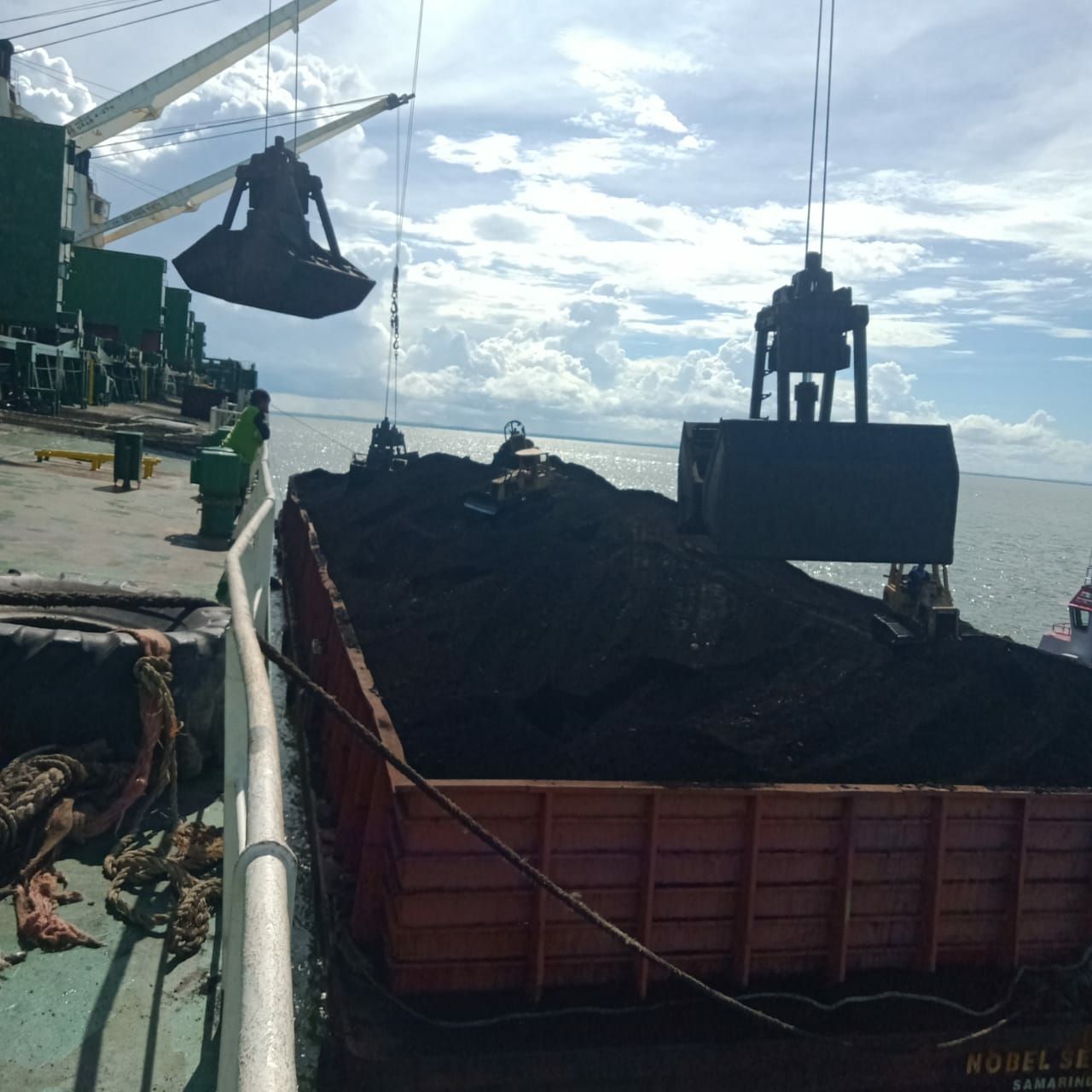
In high volume bulk ports, selecting the right grab can reduce vessel stay by several hours, especially when handling materials that require controlled digging and minimal spillage. A clamshell grab designed for coal improves cycle consistency and reduces cleanup inside the hatch. In scrap terminals, orange peel grabs with reinforced tines allow operators to manage irregular materials without sacrificing structural reliability. These examples show how proper grab selection enhances every stage of the shore to ship workflow.
The Role Of Grabs In Modern Port Operations
As ports expand their handling capacities, the role of grabs has grown from simple lifting attachments to key components of operational efficiency strategies. A well engineered grab influences cycle time, energy consumption, operator safety, and even environmental performance. For terminals that manage bulk cargo or scrap materials, choosing the right grab often becomes the determining factor in achieving competitive vessel turnaround times.
Matching Grab Types With Cargo Characteristics
Different cargo types require different handling capabilities. Fine materials such as grain need clean and precise closing edges to prevent leakage. Coarse aggregates or ores require strong penetration and high structural stability. Scrap metal depends on the precise interlocking of orange peel tines. When grabs are properly matched to cargo characteristics, ports benefit from smoother digging, fewer interruptions, and a noticeable reduction in spillage related losses.
Performance Expectations In High Duty Cycles
Port operations rarely slow down, and equipment must maintain consistent performance through continuous work. Durable structural design, reinforced arms, abrasion resistant materials, and efficient hydraulic or mechanical systems are essential. When operators use grabs capable of withstanding thousands of cycles without unexpected wear, berth productivity improves and vessel scheduling becomes far more predictable.
How Grabs Support Sustainability Goals
Environmental expectations across the global shipping industry continue to rise, and ports must demonstrate measurable progress toward cleaner operations. Grabs contribute by enabling precise loading, reducing dust emissions, and minimizing cargo spillage that would otherwise require additional handling or cleanup. A more efficient grab also lowers energy consumption by reducing unnecessary crane movements. These combined outcomes support the broader shift toward sustainable and responsible port logistics.
Challenges And Strategic Approaches
Ports face increasing operational challenges driven by higher cargo throughput, growing vessel sizes, and a wider variety of materials. Expectations related to safety, environmental compliance, and cost efficiency continue to rise. Addressing these pressures requires a strategic approach that prioritizes equipment reliability, effective planning, and workforce adaptability. Grabs remain central in this equation because they form the direct connection between crane performance and overall terminal productivity.
Workforce Shortages And Skill Gaps
Many ports struggle to recruit and retain operators who are fully capable of managing modern equipment. As a result, terminals are placing greater emphasis on user friendly control systems, standardized equipment layouts, and automated support features that reduce dependence on individual skill levels. Grabs with predictable handling behavior, stable balance, and responsive closing mechanisms allow operators with varying levels of experience to maintain safe and efficient cycle performance.
Cargo Diversification And Equipment Flexibility
Ports rarely handle a single type of cargo. A terminal may switch between grain, fertilizers, coal, scrap, and aggregates within a single operational cycle. This diversity demands a high level of equipment flexibility. Grabs with adjustable volumes, interchangeable shells, or reinforced structural components allow terminals to work more efficiently without frequent equipment changes. The ability to adjust quickly becomes a strategic advantage when vessel schedules tighten.
Reducing Operational Bottlenecks
Bottlenecks often arise from inconsistent grab performance, uneven material pickup, or mechanical downtime. Even small inefficiencies can accumulate into significant delays when multiplied across hundreds of cycles. By investing in reliable grab designs that maintain consistent penetration, closure force, and load retention, ports can reduce idle time at the berth. This also improves coordination between crane operators, yard equipment, and vessel crews.
Embracing Automation
Automation is changing how ports plan, execute, and optimize their operations. As terminals expand their digital infrastructure and rely more heavily on data driven systems, material handling equipment must integrate smoothly into these workflows. Grabs that once functioned as simple attachments now operate as key components within a larger operational ecosystem.
Remote Operation And Semi Automated Systems
Remote operated grabs allow workers to manage equipment from controlled environments, improving both safety and comfort. Semi automated opening and closing functions help reduce human error and maintain consistent performance during long shifts. These systems also stabilize cycle times because results are less affected by operator fatigue or fluctuating conditions. For ports seeking predictable and safer workflows, remote capability is becoming a practical requirement.
Data Driven Decision Making
As cranes and yard systems become increasingly connected, ports make decisions based on real time operational data. Grabs contribute to this process by offering consistent handling behavior, which helps software systems forecast cycle times more accurately. Predictable equipment performance supports more reliable scheduling, better maintenance planning, and more efficient resource allocation.
Robotics And Future Handling Concepts
Emerging technologies such as autonomous cranes, robotic inspection tools, and automated yard vehicles will shape the next generation of cargo handling. Grabs must be engineered to work effectively within these systems, providing stable geometry, responsive movements, and standardized interfaces. Although fully autonomous bulk handling is still in development, the overall direction is clear. Ports will increasingly favor equipment that is compatible with digital and robotic integration.
Future Outlook
Port logistics will continue to evolve as global trade expands and sustainability expectations increase. Terminals must adapt their infrastructure, workforce strategies, and equipment choices to remain competitive. The coming decade will be shaped by larger vessels, more variable cargo flows, and deeper integration of technology. The performance of handling equipment, including grabs, will influence both operational efficiency and environmental outcomes.
Increasing Cargo Volumes And Vessel Size
Larger vessels place significant pressure on ports to deliver faster loading and unloading operations. High throughput becomes essential for maintaining berth availability and meeting scheduling commitments. Stronger cranes and high capacity grabs that consistently achieve full volume are necessary to prevent bottlenecks and support uninterrupted logistics.
Infrastructure Modernization Priorities
Ports are investing in crane upgrades, berth reinforcement, and digital control systems. These improvements are required to support automated workflows, heavier loads, and cleaner operations. Grabs that work efficiently with advanced crane systems provide a smoother path into next generation handling environments.
Opportunities For Equipment Manufacturers
The market presents new opportunities for suppliers that can deliver equipment that is reliable, adaptable, and compatible with modern technologies. Grabs that reduce spillage, minimize maintenance needs, and support remote operation will be favored as terminals seek cleaner and more predictable operations. Güven Grab, backed by engineering expertise and worldwide references, is well positioned to support ports as they navigate this period of change.
| Trend | What Is Changing | Impact On Ports | Relevance To Grabs |
|---|---|---|---|
| Higher Cargo Volumes | Larger vessels and denser schedules | Increased pressure on cycle time | Need for high capacity, durable grabs |
| Automation | Remote operation and data systems | Safer, more predictable operations | Demand for remote compatible grab systems |
| Sustainability | Cleaner and more efficient handling standards | Reduced emissions and waste | Efficient grabs reduce spillage and energy use |
| Workforce Changes | Limited availability of skilled operators | Need for intuitive and stable equipment | Predictable grab behavior supports operator performance |
Conclusion
Port logistics is moving toward a future defined by advanced technology, greater automation, and stronger environmental responsibility. As vessels grow larger and cargo volumes continue to rise, high performance handling equipment becomes more important than ever. The right grab not only accelerates loading and unloading operations but also reduces operational costs, improves safety, and supports long term sustainability goals.
Manufacturers with deep engineering capabilities and global experience such as Güven Grab will play an essential role in this evolution. By supplying reliable and adaptable grab systems, they help ports operate confidently in an industry that demands precision, reliability, and continuous improvement.