
How To Make Port And Terminal Operations More Efficient
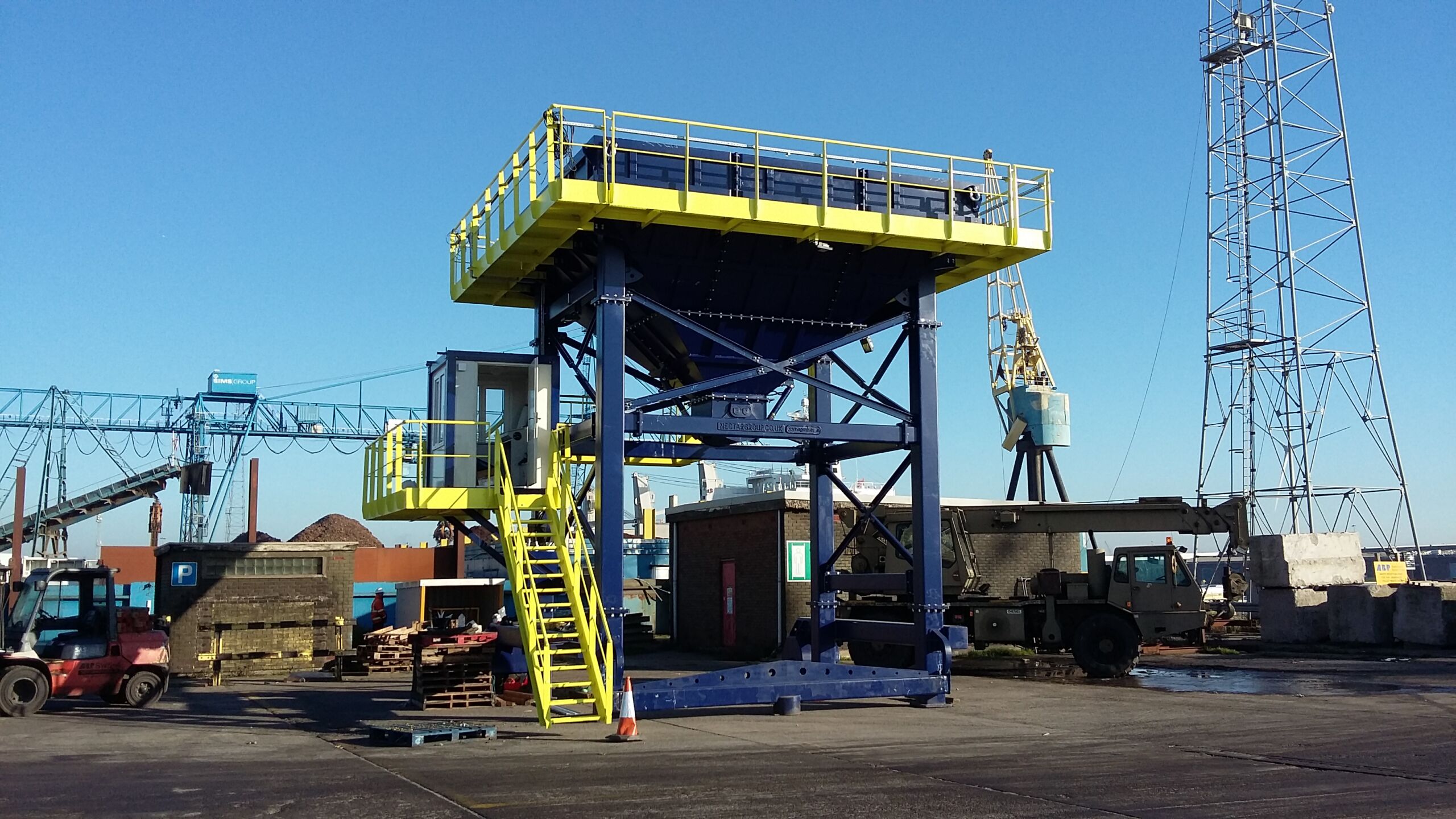
Ports and terminals operate under increasing pressure to move more cargo in less time, with fewer errors and tighter cost controls. Rising vessel sizes, fluctuating bulk volumes, and stricter turnaround expectations have turned port operations efficiency into a defining factor of commercial competitiveness rather than a purely operational concern. In this environment, inefficiencies in loading and unloading are no longer minor inconveniences. They directly affect berth occupancy, yard congestion, labor utilization, and ultimately the profitability of terminal operators.
Achieving meaningful port productivity improvement requires more than incremental process tweaks. It demands a clear understanding of how equipment selection, material flow design, and handling strategies interact on the quay and beyond. Modern grab and hopper systems play a critical role in this equation, especially in bulk cargo terminals where cycle time, spillage control, and reliability dictate overall throughput. The question many operators now face is not whether to optimize their port operations, but how to do so in a way that delivers measurable and sustainable gains.
Effective Strategies For Port And Terminal Management
Effective port and terminal management begins with recognizing that efficiency is the result of coordinated systems rather than isolated improvements. Terminals that focus solely on infrastructure expansion or labor optimization often overlook the interaction between yard layout, handling equipment, and cargo flow. True port optimization requires aligning operational strategy with physical assets so that each movement of cargo contributes to overall throughput rather than creating downstream friction.
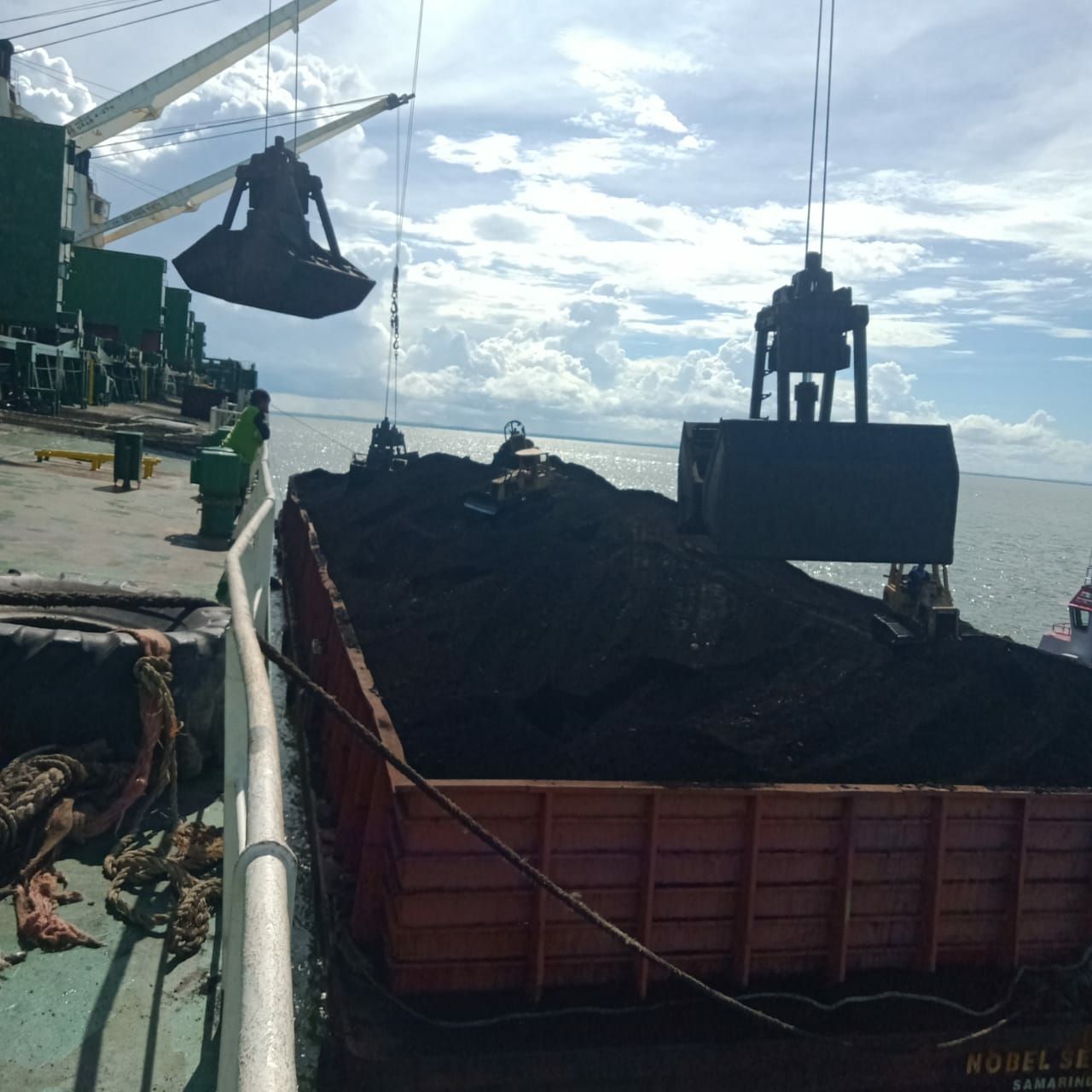
One of the most impactful strategies is prioritizing loading and unloading performance at the quay. Vessel time at berth remains one of the most expensive components of port operations, and delays at this stage quickly ripple through yard operations and gate processes. By focusing management attention on cycle times, equipment availability, and predictable discharge rates, terminals can stabilize operations across the entire facility. This is where the selection and integration of appropriate grab and hopper systems becomes a strategic decision rather than a procurement detail.
Another critical element is operational visibility. Management teams that rely solely on end-of-shift reports often react too late to inefficiencies. Instead, successful terminals monitor key performance indicators such as average grab cycle time, crane utilization, and hopper discharge consistency throughout the operation. These metrics allow supervisors to identify bottlenecks early and adjust workflows in real time, preventing minor disruptions from escalating into systemic delays.
Ultimately, effective port and terminal management is about consistency. When equipment performance, process discipline, and decision-making frameworks are aligned, terminals achieve port operations efficiency not through extraordinary effort, but through repeatable, controlled execution.
Understanding The Importance Of Port Terminals
Port terminals sit at the intersection of global trade, regional logistics, and industrial supply chains. Their performance determines not only how quickly cargo moves, but how reliably entire transportation networks function. When terminals operate below optimal efficiency, the consequences extend far beyond the port gate, affecting vessel schedules, inland transport capacity, and inventory planning for shippers and receivers alike.
Modern terminals are no longer passive transfer points. They are complex operational systems where infrastructure, equipment, labor, and information flows must work in close coordination. As cargo volumes grow and operational windows tighten, even minor inefficiencies in handling or storage can lead to congestion, increased demurrage costs, and reputational damage. This is why port optimization has become a strategic priority rather than a purely operational task.
At the core of this importance lies the terminal’s role in controlling cargo velocity. How quickly material is discharged from a vessel, transferred through the yard, and released to onward transport directly defines terminal productivity. In bulk cargo operations especially, the effectiveness of grabs, cranes, and hoppers determines whether the terminal operates as a bottleneck or as an enabler of smooth cargo flow.
Port Terminals As Vital Hubs In The Global Supply Chain
Port terminals function as the primary synchronization points between maritime transport and inland logistics networks. Every inefficiency at this node is amplified as cargo moves downstream, affecting rail schedules, truck availability, and storage planning across multiple regions. For this reason, port operations efficiency is not only a terminal-level concern, but a key contributor to overall supply chain reliability.
In bulk and breakbulk operations, terminals play an even more decisive role. Unlike containerized cargo, bulk materials rely heavily on handling equipment performance for speed and accuracy. Delays caused by slow discharge rates, inconsistent grab performance, or spillage during loading directly disrupt vessel turnaround and yard planning. Over time, these issues erode a terminal’s ability to attract regular shipping lines and long-term contracts.
From a strategic perspective, terminals that consistently deliver high port productivity improvement position themselves as preferred partners within the global supply chain. Shipping companies value predictable berth times, cargo owners prioritize minimal material loss, and inland operators depend on steady cargo release rates. The terminal becomes not just a point of transfer, but a value-adding hub that stabilizes the entire logistics ecosystem.
This central role is why investment in optimized loading and unloading systems, particularly modern grabs and hoppers, is increasingly viewed as a supply chain investment rather than a purely operational expense.
The Role Of Maritime And Intermodal Terminals In Cargo Transportation
Maritime and intermodal terminals serve as the physical and operational bridge between sea transport and inland distribution networks. Their effectiveness depends on how smoothly cargo transitions from vessel discharge to rail wagons, trucks, or storage areas without creating delays or imbalances in flow. When this transition is poorly managed, even high-performing quay operations can quickly lose their efficiency gains.
In bulk cargo terminals, the coordination between maritime handling and inland transport is particularly sensitive. Variations in discharge rates, inconsistent grab performance, or uncontrolled material flow can overwhelm yard capacity and disrupt truck or rail scheduling. This is why port optimization efforts must consider not only the speed of unloading but also the stability and predictability of cargo release into the hinterland.
Handling equipment plays a decisive role in this integration. Grabs that deliver consistent payloads and hoppers that regulate material flow allow terminals to align vessel operations with inland logistics capacity. This alignment reduces congestion, shortens waiting times, and supports overall port productivity improvement. In practice, terminals that treat maritime and intermodal operations as a single continuous process achieve far greater efficiency than those that manage them in isolation.
By viewing cargo transportation as an interconnected system rather than a sequence of independent steps, port operators can unlock sustainable efficiency gains across the entire terminal operation.
Key Factors In Optimizing Port Terminal Operations
Optimizing port terminal operations requires a clear understanding of the variables that most strongly influence daily performance. While external factors such as vessel schedules and cargo mix play a role, the largest efficiency gains are typically achieved by improving controllable elements within the terminal itself. These include yard organization, connectivity with inland transport, and the performance of handling equipment during critical loading and unloading phases.
Terminals that succeed in port optimization focus on reducing variability in operations. Unpredictable discharge rates, inconsistent equipment performance, or poorly structured yard movements create cascading inefficiencies that are difficult to correct once congestion builds. By contrast, terminals designed around stable material flow and repeatable processes are better positioned to absorb fluctuations in cargo volume without compromising throughput.
At this stage, it becomes evident that port operations efficiency is not driven by a single factor. It is the cumulative result of multiple interdependent decisions, each of which either supports or undermines overall productivity. The following elements represent the most influential areas where targeted improvements deliver measurable port productivity improvement.
Yard Capacity And Layout
Yard capacity and layout are foundational to port operations efficiency, yet they are often constrained by legacy designs or incremental expansions rather than holistic planning. An inefficient yard layout increases travel distances, creates unnecessary crossings between equipment, and amplifies congestion during peak discharge periods. Over time, these inefficiencies erode the benefits gained at the quay, regardless of crane or grab performance.
In bulk cargo terminals, yard design must support uninterrupted material flow from vessel to storage or onward transport. Poorly positioned stockpiles or inadequate buffer zones force equipment to wait or reposition frequently, extending cycle times and reducing effective throughput. When loading and unloading operations outpace yard handling capacity, congestion quickly develops and limits overall port productivity improvement.
Optimized yard layouts prioritize clear traffic separation, direct transfer routes, and sufficient buffer capacity to absorb short-term fluctuations in discharge rates. When combined with consistent grab output and controlled hopper discharge, a well-designed yard allows terminals to sustain high performance throughout the operational window. In this context, yard capacity is not merely a question of available space, but of how intelligently that space supports continuous and predictable cargo movement.
Maritime Rail And Road Connectivity
Efficient port operations do not end at the quay or yard boundary. Maritime, rail, and road connectivity determines how effectively cargo exits the terminal and whether internal efficiency gains translate into real port productivity improvement. When inland transport interfaces are poorly coordinated, terminals experience backlogs regardless of how fast vessels are discharged.
In bulk terminals, inconsistent coordination between ship unloading and truck or rail availability often leads to temporary storage overloads and idle handling equipment. Cargo may be discharged efficiently from the vessel, only to accumulate in the yard due to limited outbound capacity. This imbalance creates operational stress, increases handling costs, and undermines overall port optimization efforts.
Effective connectivity relies on predictable cargo release rates. Modern grab systems that deliver consistent loads, paired with hopper solutions that regulate discharge, enable terminals to synchronize maritime operations with inland transport schedules. This synchronization reduces waiting times, minimizes queuing at exit points, and stabilizes traffic flow across the terminal. When maritime and inland systems operate in harmony, terminals achieve port operations efficiency that is both measurable and sustainable.
Handling Equipment And Crane Performance
Handling equipment and crane performance sit at the heart of port operations efficiency, particularly in bulk cargo terminals where loading and unloading speed directly defines vessel turnaround time. Even well-designed yards and strong intermodal connectivity cannot compensate for underperforming grabs or poorly matched crane systems. When equipment fails to deliver consistent cycle times, variability quickly spreads across the entire operation.
Crane productivity is not determined by lifting capacity alone. The interaction between crane dynamics, grab weight, closing force, and material behavior defines how efficiently each cycle is completed. Grabs that are poorly suited to the cargo type can increase spillage, require rehandling, or extend closing times, all of which reduce effective throughput. Over hundreds of cycles per shift, these inefficiencies accumulate into significant productivity losses.
Modern terminals pursuing port optimization increasingly evaluate handling equipment as a system rather than as individual components. The right grab configuration improves load control, reduces unnecessary movements, and allows cranes to operate closer to their optimal duty cycle. When supported by stable hopper discharge and predictable downstream flow, high-performing crane and grab combinations become a decisive factor in achieving sustained port productivity improvement.
The Impact Of Modern Grab And Hopper Systems On Port Productivity
Modern grab and hopper systems have become critical enablers of port operations efficiency, particularly in terminals handling bulk commodities such as coal, grain, fertilizer, and minerals. While cranes provide lifting power, it is the grab and hopper combination that ultimately controls how quickly, accurately, and cleanly material moves through the port. Small improvements at this level often produce disproportionate gains in overall throughput.
From an operational standpoint, the primary advantage of modern systems lies in consistency. Stable grab performance ensures predictable payloads per cycle, while well-designed hoppers regulate material flow to match downstream capacity. Together, they reduce stoppages, limit spillage, and allow terminals to maintain steady loading and unloading rates even under variable operating conditions. This stability is a key driver of port productivity improvement, especially during peak discharge windows.
Equally important is adaptability. Ports rarely handle a single cargo type, and terminals that rely on rigid or outdated equipment often struggle to maintain efficiency across different materials. Advanced grab designs and modular hopper systems allow operators to adjust to changing cargo characteristics without compromising safety or performance. In this context, investment in modern handling systems directly supports long-term port optimization rather than short-term capacity expansion.
Electro Hydraulic Clamshell Motor Grab In High Throughput Operations
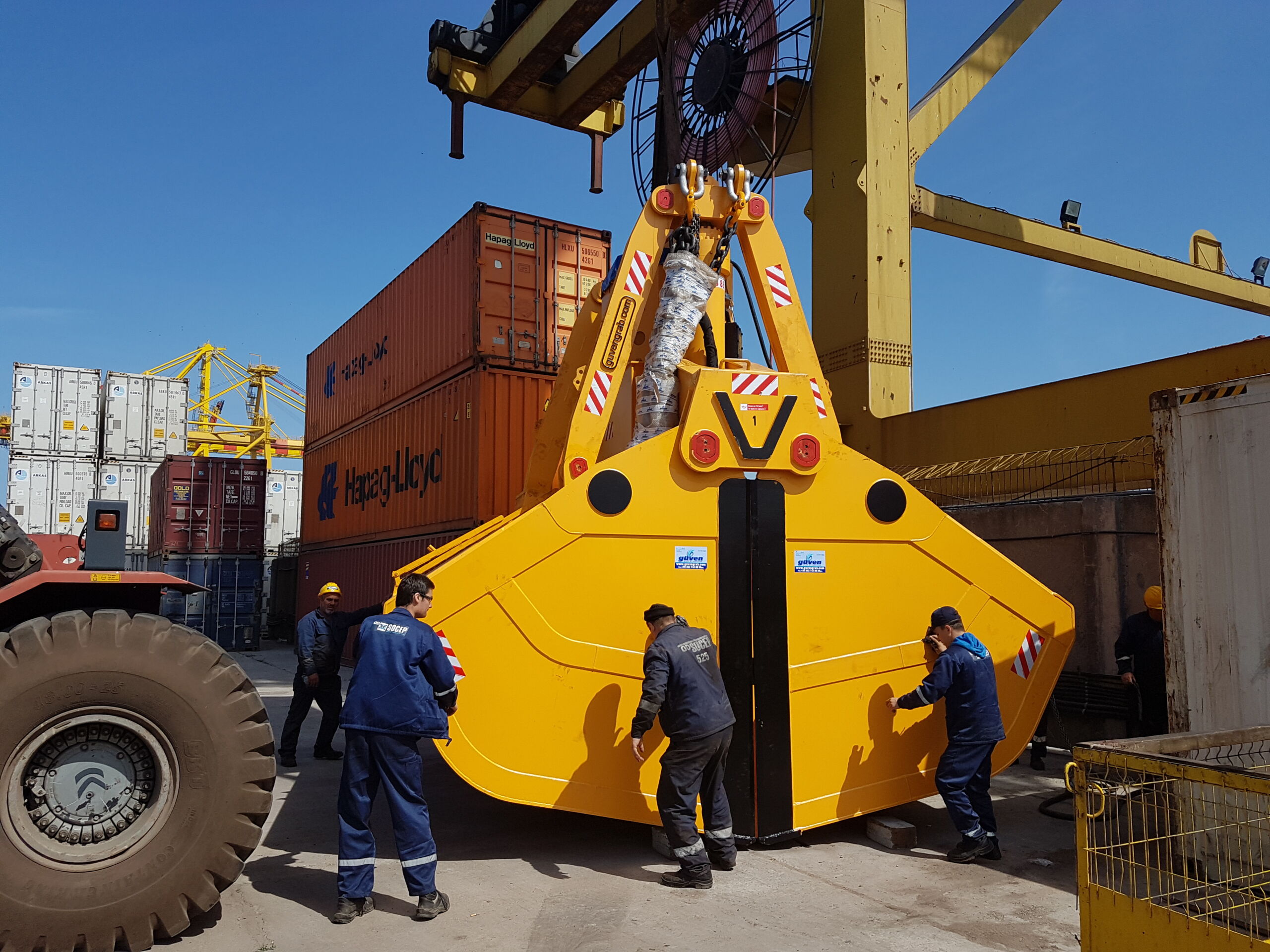
Electro hydraulic clamshell motor grabs are increasingly preferred in terminals where high throughput and operational control are critical. Their self-contained hydraulic systems allow for precise closing force and smooth operation, which directly improves cycle consistency during intensive loading and unloading activities. This precision is especially valuable when handling bulk materials with varying density or flow characteristics.
From a productivity standpoint, these grabs reduce variability in each lifting cycle. Controlled closing minimizes material loss and ensures more uniform payloads, allowing cranes to operate at predictable rates. Over the course of a shift, this consistency translates into measurable port productivity improvement through shorter vessel stays and reduced need for rehandling. Operators also benefit from improved safety, as stable grab behavior reduces sudden load shifts and crane oscillation.
In the broader context of port optimization, electro hydraulic clamshell motor grabs support a more disciplined operational model. Their reliability and repeatable performance make them well suited for terminals aiming to standardize procedures and maintain high efficiency across multiple berths. When integrated with appropriately sized hoppers, these grabs become a key component in sustaining continuous cargo flow without overwhelming downstream processes.
Mechanical Clamshell 2 Roped Grab For Robust And Cost Effective Handling
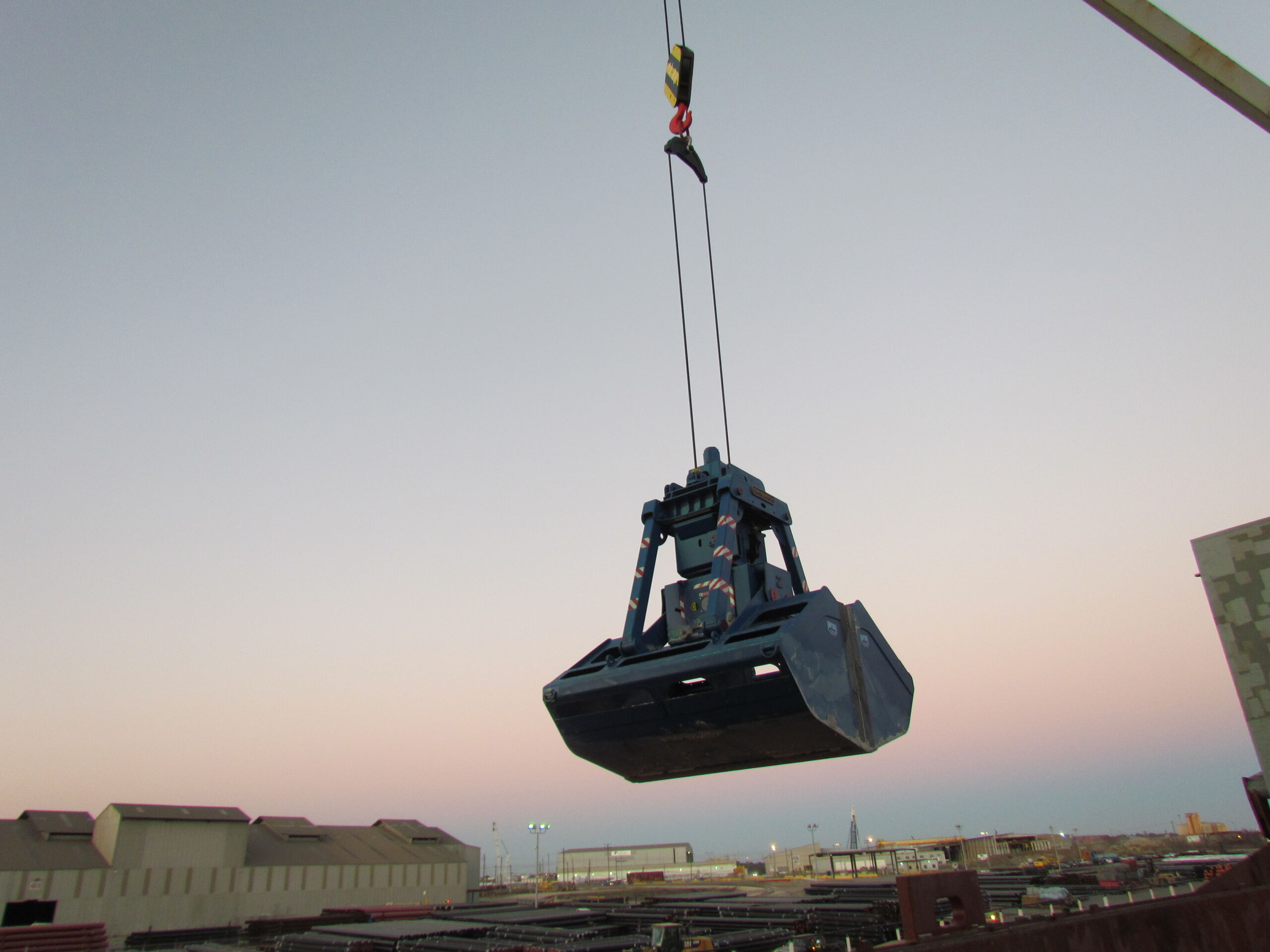
Mechanical clamshell 2 roped grabs continue to play a vital role in many port and terminal operations where simplicity, durability, and cost control are primary considerations. Their mechanical design allows them to operate without onboard power systems, making them highly compatible with a wide range of existing crane setups, particularly in terminals with established infrastructure.
From an efficiency perspective, these grabs offer predictable performance in steady bulk handling scenarios. While they may not provide the same level of closing force control as electro hydraulic systems, their reliability under continuous operation makes them well suited for terminals handling uniform materials at consistent volumes. Reduced system complexity also means fewer failure points, contributing to high equipment availability and stable loading and unloading schedules.
In terms of port optimization, mechanical clamshell 2 roped grabs are often selected as part of a broader efficiency strategy rather than as a standalone solution. When paired with well-designed hoppers and supported by disciplined operating procedures, they can deliver meaningful port productivity improvement without significant capital expenditure. For many terminals, especially those focused on long-term operational resilience, this balance between performance and robustness remains a decisive advantage.
Hopper Systems As A Bottleneck Eliminator In Bulk Cargo Flow
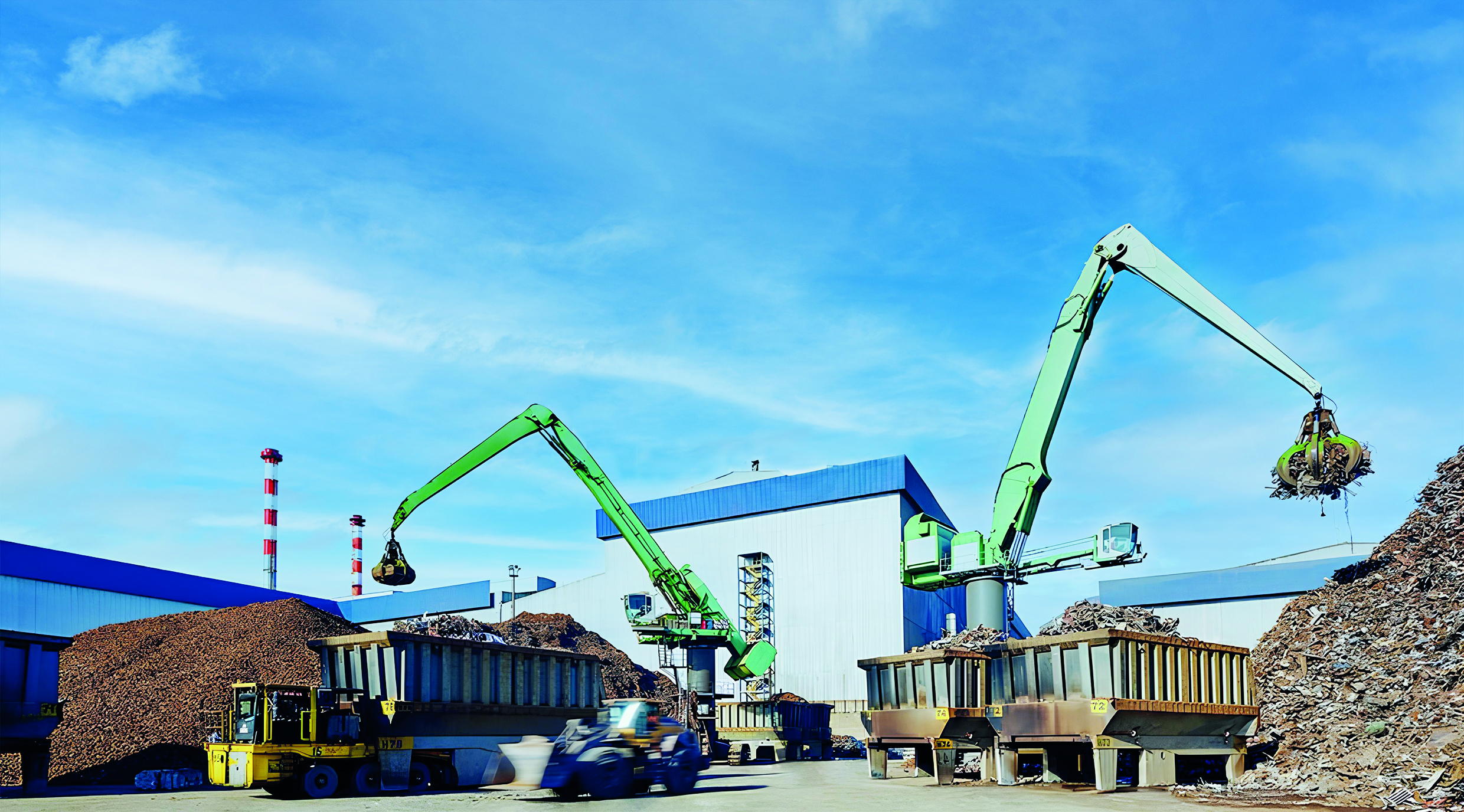
Hopper systems play a decisive role in transforming efficient vessel discharge into sustained terminal productivity. While grabs determine how quickly material is lifted from the hold, hoppers control how smoothly that material is transferred to trucks, conveyors, or rail wagons. Without proper hopper integration, even the most advanced grab systems can become sources of congestion rather than efficiency.
In bulk cargo operations, uncontrolled discharge often creates stop-and-go workflows. Trucks queue under cranes, conveyors are intermittently overloaded, and operators are forced to slow down vessel unloading to avoid yard saturation. Well-designed hopper systems eliminate this bottleneck by acting as a buffer, absorbing short-term fluctuations in discharge rate while maintaining a steady outbound flow. This buffering effect is one of the most effective contributors to port operations efficiency.
From a port optimization perspective, hoppers also improve safety and material control. Regulated discharge reduces spillage, minimizes dust generation, and allows better coordination with inland transport schedules. When paired with consistent grab performance, hopper systems enable terminals to maintain predictable loading and unloading rhythms throughout the shift. The result is a measurable port productivity improvement that extends beyond the quay and into the broader logistics chain.
Port Management Strategies For Sustainable Efficiency
Sustainable port operations efficiency is achieved not only through modern equipment, but through management strategies that ensure consistent performance over time. Terminals that rely solely on asset upgrades often experience short-term gains that gradually erode due to process drift, inconsistent decision-making, or misaligned priorities. Effective port optimization requires management frameworks that reinforce discipline, accountability, and continuous improvement.
A central element of sustainable efficiency is aligning operational targets with real-world constraints. Overly aggressive discharge rates may appear productive in isolation, yet they often lead to yard congestion, excessive wear on equipment, or downstream delays. Successful port management strategies balance speed with stability, ensuring that gains at the quay are supported by yard capacity, transport availability, and manpower planning.
Equally important is the ability to translate operational data into actionable decisions. Terminals that systematically analyze performance indicators such as average grab cycle time, hopper utilization, and gate throughput are better positioned to identify inefficiencies before they escalate. When management decisions are informed by operational realities rather than assumptions, port productivity improvement becomes repeatable rather than incidental.
Enhancing Gate Processes And Reducing Waiting Times
Gate operations are often an overlooked source of inefficiency in port and terminal environments. Even when quay and yard activities perform well, congested entry and exit points can quickly neutralize productivity gains. Long truck queues, inconsistent documentation checks, and poor coordination between discharge schedules and gate capacity increase turnaround times and place unnecessary strain on terminal resources.
From a port operations efficiency perspective, the key issue is variability. When trucks arrive in uneven waves or are released unpredictably from the yard, congestion becomes unavoidable. Efficient terminals address this by aligning gate processes with loading and unloading rhythms. Predictable grab performance and regulated hopper discharge enable more accurate planning of truck movements, reducing idle time for both drivers and equipment.
Improving gate efficiency does not always require complex automation. Clear appointment systems, real-time communication between yard supervisors and gate operators, and stable cargo release rates often deliver immediate port productivity improvement. When gate processes are treated as an integral part of terminal operations rather than a standalone function, waiting times decrease and overall port optimization efforts become far more effective.
Improving Container And Bulk Storage Efficiency
Storage efficiency is a critical link between fast vessel operations and smooth cargo exit from the terminal. In both container and bulk terminals, poorly organized storage areas often become silent bottlenecks that restrict throughput without being immediately visible. When storage strategies fail to support the pace of loading and unloading, terminals are forced to slow operations upstream, undermining overall port operations efficiency.
For bulk cargo terminals, storage efficiency depends heavily on controlled material flow and clear segregation of cargo types. Inadequate stockpile planning or insufficient buffer zones increase rehandling, extend travel distances, and elevate the risk of contamination or material loss. These issues not only reduce port productivity improvement but also increase operational costs over time. Consistent grab output and hopper-regulated discharge allow storage areas to function predictably, supporting stable stacking and retrieval cycles.
Container terminals face similar challenges, where poor stack organization or inefficient block assignment leads to excessive reshuffling and crane interference. In both cases, the underlying principle remains the same. Storage areas must be designed and managed to absorb operational variability rather than amplify it. When storage efficiency aligns with quay performance and gate capacity, terminals achieve a balanced operational rhythm that supports long-term port optimization.
Leveraging Digital Technologies For Smart Ports
Digital technologies are increasingly shaping how ports pursue port operations efficiency, not by replacing physical assets, but by enhancing how they are used. Smart port initiatives focus on improving visibility, predictability, and coordination across operations rather than automating every task. For many terminals, the most valuable digital gains come from better decision support rather than full system automation.
At an operational level, data collected from cranes, grabs, and hoppers provides insight into real performance rather than planned capacity. Metrics such as grab cycle consistency, idle time between lifts, and hopper discharge stability help supervisors identify inefficiencies as they occur. This real-time awareness allows corrective actions to be taken during operations, supporting immediate port productivity improvement rather than post-shift analysis.
Digital tools also strengthen coordination between quay operations, yard management, and gate processes. When discharge rates are visible and predictable, inland transport scheduling becomes more accurate and congestion risks are reduced. In this way, digital technologies act as force multipliers for existing equipment and processes. When combined with modern grab and hopper systems, they enable terminals to move toward smarter, more resilient port optimization without sacrificing operational flexibility.
Practical Efficiency Gains From Optimized Loading And Unloading
Optimized loading and unloading operations are where port strategies, equipment selection, and management discipline translate into tangible results. In bulk cargo terminals, even marginal improvements in cycle time or material control can generate substantial gains over the course of a single vessel operation. Faster discharge reduces berth occupancy, stabilizes yard flow, and improves coordination with inland transport, all of which directly support port operations efficiency.
One of the most immediate gains comes from reducing variability. When grab performance is consistent and hopper discharge is regulated, terminals can plan truck and rail movements with greater accuracy. This predictability minimizes idle time for cranes, reduces congestion in storage areas, and lowers the risk of operational stoppages. Over time, these improvements compound, delivering sustained port productivity improvement rather than short-lived performance spikes.
From an operational perspective, terminals that invest in optimized loading and unloading systems also benefit from lower indirect costs. Reduced spillage limits cleanup requirements and material loss, while smoother workflows decrease equipment wear and unplanned downtime. These factors may not always appear in headline productivity metrics, yet they play a decisive role in long-term port optimization and cost control.
To summarize how modern grab and hopper systems influence daily operations, the table below highlights key operational impacts.
| Operational Area | Traditional Handling Impact | Optimized Grab And Hopper Systems Impact |
|---|---|---|
| Vessel Turnaround Time | Extended due to inconsistent cycle times | Reduced through stable and predictable discharge |
| Yard Congestion | Frequent bottlenecks and rehandling | Smoother flow with controlled material release |
| Material Loss And Spillage | Higher cleanup and loss rates | Minimized through controlled closing and discharge |
| Equipment Utilization | Idle time caused by flow imbalance | Higher utilization with synchronized operations |
| Overall Port Productivity | Variable and difficult to sustain | Consistent and scalable improvement |
Conclusion
Improving port and terminal operations efficiency is no longer a matter of isolated upgrades or short-term performance targets. In today’s competitive logistics environment, sustainable port optimization depends on how effectively equipment, processes, and management strategies are aligned across the entire operation. From quay-side unloading to yard flow and inland connectivity, each stage must support the next to prevent efficiency gains from being lost downstream.
Modern grab and hopper systems play a central role in this alignment. By delivering consistent cycle times, controlled material flow, and reduced operational variability, they enable terminals to stabilize loading and unloading activities while improving safety and cost control. When supported by disciplined port management strategies and data-driven decision-making, these systems contribute directly to measurable and repeatable port productivity improvement.
For terminal operators and decision-makers, the key takeaway is clear. Efficiency is not achieved through maximum speed alone, but through balanced, predictable, and well-coordinated operations. Ports that invest in optimized handling solutions and integrate them into a broader operational strategy position themselves for long-term resilience, stronger commercial performance, and a more reliable role within the global supply chain.
Table of Contents
- Effective Strategies For Port And Terminal Management
- Understanding The Importance Of Port Terminals
- Port Terminals As Vital Hubs In The Global Supply Chain
- The Role Of Maritime And Intermodal Terminals In Cargo Transportation
- Key Factors In Optimizing Port Terminal Operations
- Yard Capacity And Layout
- Maritime Rail And Road Connectivity
- Handling Equipment And Crane Performance
- The Impact Of Modern Grab And Hopper Systems On Port Productivity
- Electro Hydraulic Clamshell Motor Grab In High Throughput Operations
- Mechanical Clamshell 2 Roped Grab For Robust And Cost Effective Handling
- Hopper Systems As A Bottleneck Eliminator In Bulk Cargo Flow
- Port Management Strategies For Sustainable Efficiency
- Enhancing Gate Processes And Reducing Waiting Times
- Improving Container And Bulk Storage Efficiency
- Leveraging Digital Technologies For Smart Ports
- Practical Efficiency Gains From Optimized Loading And Unloading
- Conclusion