Can a Steel Grab Be Used For Mining Operations?
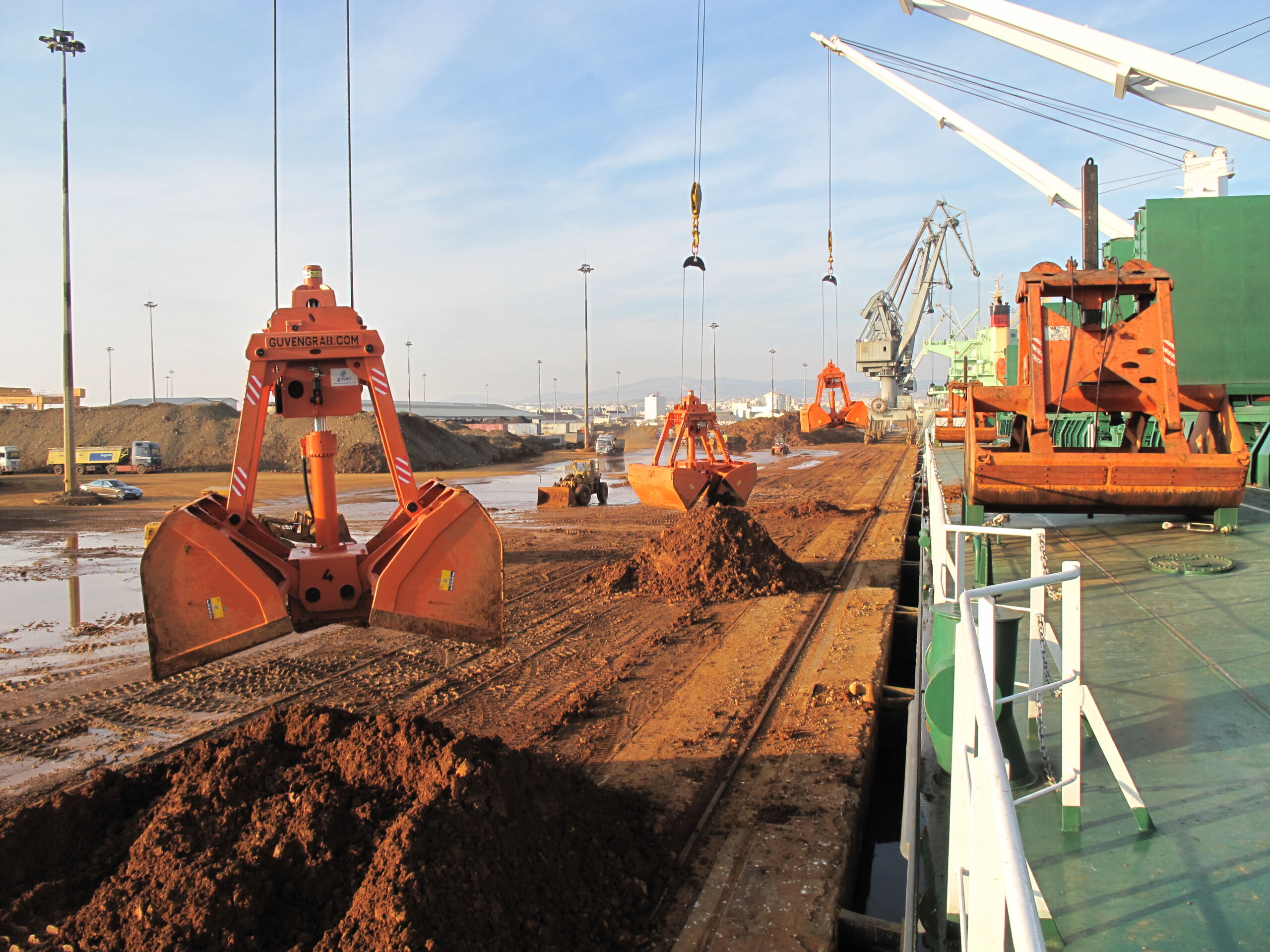
In modern mining operations, efficiency, safety, and reliability are measured not only by output but also by how well materials are handled. Every movement of ore, aggregate, or waste affects production flow and overall profitability. For this reason, mining companies continually assess equipment that can withstand harsh conditions without slowing down operations. Among the many material-handling attachments in use today, steel grabs, commonly found in ports, construction sites, and bulk cargo terminals, are now gaining attention in mining.
At first glance, the idea may seem unconventional. Mining traditionally depends on excavator buckets and dragline systems built for constant ground engagement. Yet as operations diversify and supply chains become more connected, the use of grabs in mining logistics has grown. Whether loading crushed ore for transport, managing tailings, or transferring material between stockpiles, the strength and versatility of a steel grab bucket make it a valuable supporting tool. What matters most is understanding how its design fits the demanding conditions of mining sites and where its practical limits begin.
Design And Functionality Of Steel Grabs
The efficiency of a steel grab depends on its mechanical strength and its ability to adapt to different material-handling environments. Designed mainly for bulk operations, these grabs combine durability, thoughtful geometry, and hydraulic control to move dense materials safely and efficiently. In mining, where abrasiveness and irregular loads are daily challenges, the engineering behind the grab becomes a major factor in long-term performance.
Structural Composition And Strength Factors
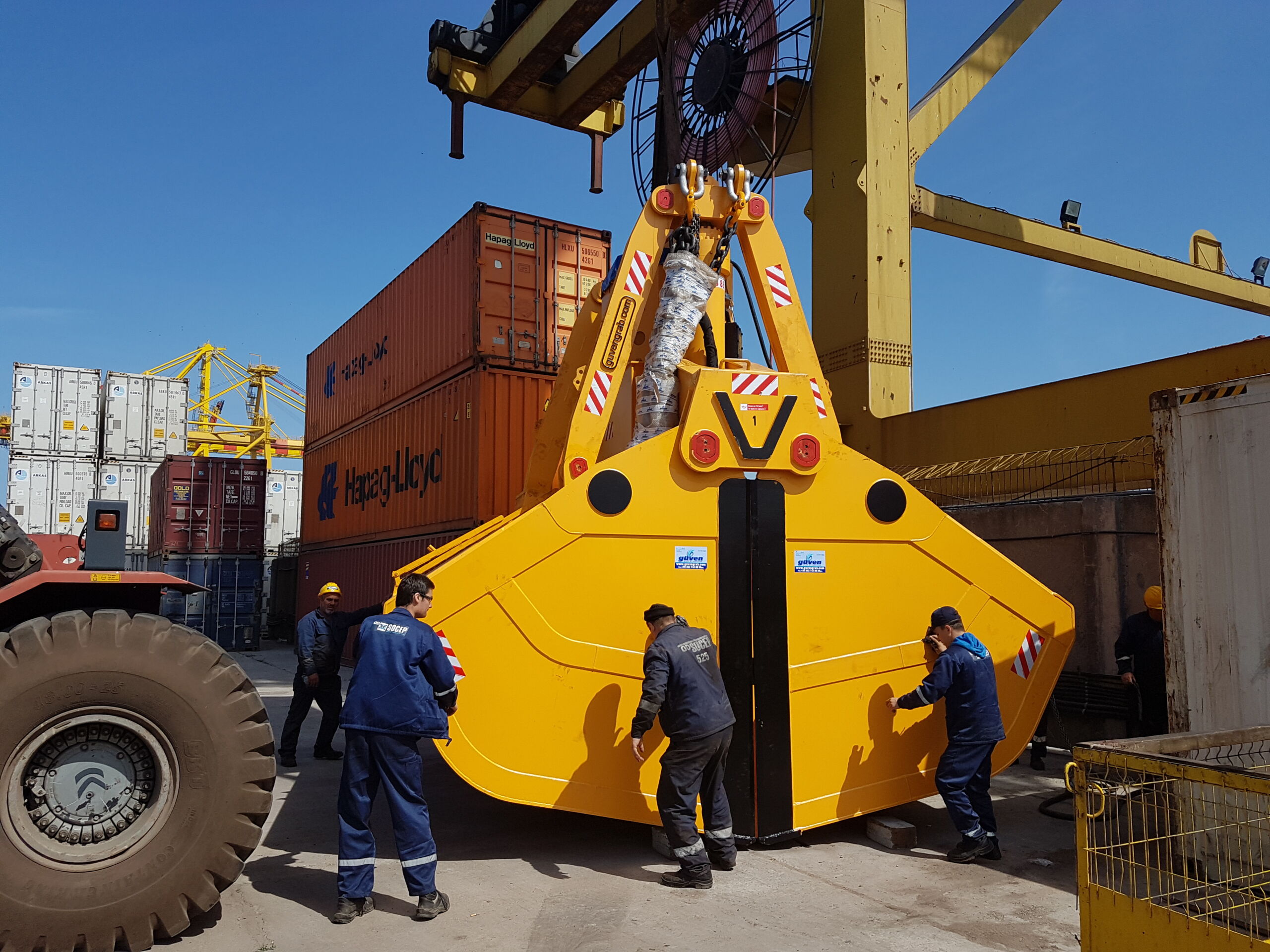
A well-designed steel grab bucket is not simply a heavy metal container. It is a balanced structure built to withstand repeated stress, impact, and abrasion. The body is usually made from high-tensile structural steel, and key contact areas are reinforced with wear-resistant Hardox plates or similar materials. These reinforcements greatly extend the grab’s lifespan in environments where materials such as iron ore, bauxite, or limestone can quickly wear down standard steel.
In Güven Grab’s manufacturing process, each grab is examined for stress concentration points, especially around the pivots, hinge joints, and lower shell edges. Finite Element Analysis (FEA) is used to confirm that the frame can absorb sudden load shifts without bending or deforming. This structural strength supports both safety and efficiency, allowing operators to move larger volumes per cycle without placing unnecessary strain on the crane or lifting system.
Hydraulic And Remote Control Mechanisms
The operating system of a grab determines how well it can perform in rugged and unpredictable environments such as mines or quarries. Hydraulic and electro-hydraulic systems are the most common options, offering precise control, steady closing pressure, and compatibility with different crane setups.
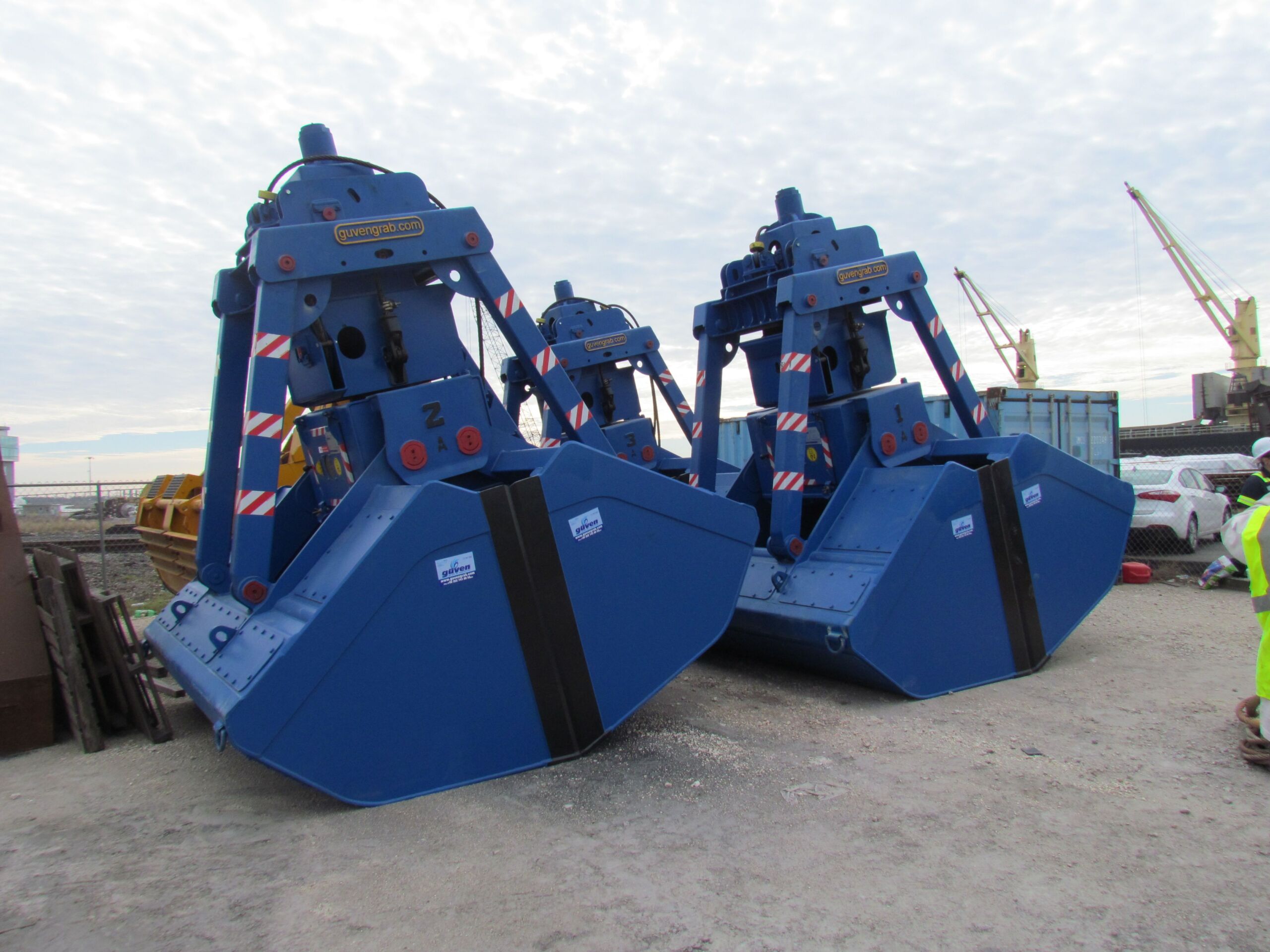
Hydraulic grabs use double-acting cylinders that open and close the shells with controlled pressure, allowing for a secure grip even on irregular or unevenly sized materials. In areas where power sources are limited, such as open-pit transfer points or underground loading zones, radio remote control grabs provide a practical solution. These models remove the need for external hydraulic power packs and instead rely on built-in battery systems that can operate for up to 400 hours. This extended runtime is a distinct advantage of advanced systems like those produced by Güven Grab.
When combined with load-balancing valves, reinforced pins, and smooth-opening mechanisms, these systems ensure that materials are released safely and without causing unnecessary movement. This is especially important in confined spaces or elevated loading areas, which are common in mining logistics.
Suitability For Mining Operations
The mining sector demands machinery that can withstand extreme abrasion, high-impact loading, and long operating hours without losing accuracy. Steel grabs, typically used in bulk ports and scrap yards, are gaining new relevance in mining because of their strength and adaptable operation. However, their effectiveness depends on how and where they are integrated into the wider mining process.
Material Handling Efficiency
In surface mines and mineral processing facilities, a steel grab bucket can play an important role in moving raw or processed materials. When loading ores, coal, or crushed aggregates, the grab’s strong closing force provides a secure hold even on coarse or irregular shapes. Compared with standard excavator buckets, grabs can move larger volumes per lift when suspended from a crane or material handler. This makes them useful for transferring materials from stockpiles to hoppers or conveyor systems.
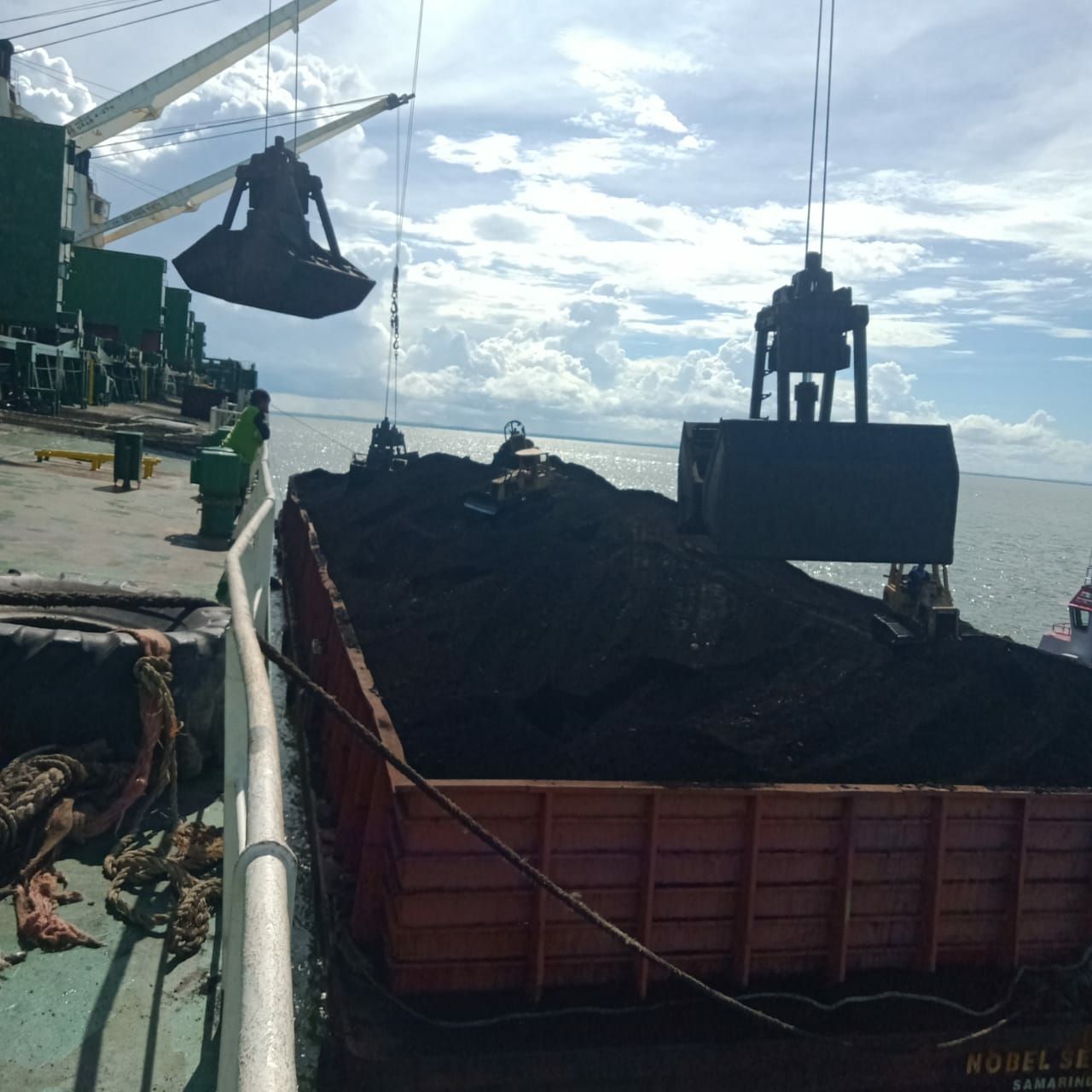
For instance, in open-pit iron ore operations, mechanical or hydraulic clamshell grabs can load railcars or barges with consistent fill levels, reducing both spillage and cycle times. Their controlled grip helps maintain even distribution, which is essential for stability during rail or ship loading.
To explore how electro-hydraulic grab systems enhance mining efficiency, see our previous article “Why Electro Hydraulic Grabs Are Ideal For Mining Applications”.
Waste And By-Product Management
Mining generates large amounts of waste, including tailings, overburden, scrap metal, and debris from maintenance work. In these situations, the versatility of steel grabs becomes a practical advantage. Unlike fixed buckets, grabs can collect loose or scattered material efficiently without digging into the ground. This makes them especially useful in waste sorting areas or recycling sections within mining sites.
Some operations also use smaller grabs to move sludge, fine waste, or contaminated soil from tailings ponds or water treatment units. Because these grabs can be mounted on both fixed cranes and mobile excavators, they offer flexibility across different parts of the site without requiring major equipment changes.
Safety And Control Precision
Mining environments come with built-in safety challenges, including limited visibility, uneven ground, and the constant movement of heavy suspended loads. Modern steel grabs, especially hydraulic and remote-control models, help improve safety by allowing more controlled operation and reducing the need for workers to be near the material.
Features like soft opening systems, load-stabilizing designs, and anti-swing mechanisms prevent sudden drops and keep loads steady, protecting both people and nearby equipment. In higher-risk areas, remote-control operation allows the grab to work without anyone standing close to the load zone, lowering the risk of injuries caused by falling material or unexpected equipment issues.
For mining companies focused on meeting safety targets, these design advancements support compliance with international standards such as ISO 45001 and MSHA safety regulations.
Limitations And Considerations
While steel grabs offer strength and versatility, mining operations come with their own challenges that can reveal the limits of these tools. Understanding these limitations helps decision-makers select the right configuration or determine when a specialized bucket or attachment may be more effective.
Abrasive Environment And Maintenance Needs
The biggest concern in mining is abrasive wear. Materials such as nickel, iron, or copper ore contain sharp edges and dense particles that can quickly wear down grab shells, hinge pins, and cutting edges. Even with Hardox or similar reinforcement, prolonged handling of abrasive materials requires regular inspection, lubrication, and replacement of worn parts.
Dust, mud, and fine particles can also enter hydraulic systems and bearings, causing reduced performance or leaks. To reduce these risks, many operators use sealed bushings, high-quality hydraulic hoses, and replaceable wear liners. These upgrades slightly increase initial costs but significantly lower long-term maintenance expenses.
For high-volume mines, it is wise to maintain a preventive maintenance schedule that includes daily checks of pivot areas and hydraulic seals. This helps ensure smooth operation and reduces the chances of unexpected downtime.
Size, Capacity, And Equipment Compatibility
Another key limitation is equipment compatibility. Steel grabs are built to work with cranes, material handlers, or shiploaders, which are designed for vertical lifting rather than digging. In mining, this means their performance depends largely on the supporting machine’s lifting capacity and reach.
For instance, a 10 to 12 cubic meter grab commonly used in port operations may be too large for certain mining cranes or excavators. On the other hand, smaller grabs can become inefficient in large-scale mines where each cycle must move substantial tonnage. Matching the grab’s weight, capacity, and center of gravity with the crane’s rated load chart is essential to maintain stability and prevent overloading the lifting system.
In Güven Grab’s engineering approach, this compatibility is evaluated during the design stage. Each grab can be adjusted for the intended lifting machine, whether it is a Sennebogen material handler, a Liebherr port crane, or a stationary hoisting setup. This ensures reliable performance and protects operator safety.
Specialized Mining Alternatives
In certain stages of the mining process, dedicated equipment performs better than standard steel grabs. For direct ground excavation, removing compacted ore, or breaking through hard layers, heavy-duty mining buckets or dragline attachments are more effective. These tools are built with deeper profiles, cutting edges, and ground-engaging components that maximize digging performance, features that grabs, by design, are not meant to provide.
However, this does not make grabs any less valuable. They support mining operations by handling tasks such as ore transfer, ship loading, and yard stockpile management, where flexibility and controlled movement matter more than penetration force.
When both equipment types are used strategically, they create a balanced material-handling system that improves overall process flow from pit to port.
Comparison With Other Grab Types
Selecting the right grab for mining operations requires balancing strength, precision, and operational efficiency. While all grabs serve the same fundamental purpose of lifting and transferring bulk materials, their internal mechanisms and design goals can vary widely. Understanding these differences helps operators determine when a standard steel grab is adequate and when a more specialized attachment may offer better value or performance.
Performance Comparison Of Grab Types
| Grab Type | Key Strength | Ideal Application | Maintenance Demand | Approximate Capacity Range |
|---|---|---|---|---|
| Steel Mechanical Grab | Simple, durable, and cost-effective | General bulk handling, minerals, scrap, waste | Low | 1-20 cbm |
| Hydraulic Clamshell Grab | High control and efficient closure pressure | Dense ores, confined loading zones | Medium | 0.5-15 cbm |
| Electro-Hydraulic Grab | Self-powered, suitable for continuous loading | Port loading of mined materials, ship-to-shore operations | High | 4-25 cbm |
| Remote Control Grab | Fully autonomous, requires no hydraulic system | Vessel loading, offshore and remote mining logistics | Medium | 8-20 cbm |
This comparison shows how each grab type supports different operational needs. Mechanical grabs are well suited for rough, open-air material transfer where simple maintenance is a priority. Hydraulic and electro-hydraulic models provide better control and faster cycle times, which is especially useful when handling dense or higher-value materials.
For mines that connect to ports or storage terminals, remote-control grabs offer a particularly strong advantage. Their ability to operate without power cables or hydraulic hoses makes crane integration easier and reduces stoppages. These features contribute directly to faster loading cycles and lower energy use, which are important goals for modern mining logistics.
Operational Flexibility And Customization
What sets Güven Grab’s approach apart is not only its range of products but also its ability to engineer each grab according to the user’s operating environment. The design can be adjusted by changing shell geometry, selecting different steel grades, or configuring the hydraulic system to handle materials ranging from crushed ore to construction aggregates.
For example, in mining operations where highly abrasive materials such as quartzite or silica sand are handled every day, Güven Grab can produce shells with thicker wear plates and reinforced closing edges for extended durability. In contrast, in waste-handling zones where accuracy matters more than brute force, lighter shells and faster closing systems help improve overall responsiveness.
By adjusting these parameters, the company ensures that each grab, whether mechanical, hydraulic, or remote control, matches the user’s specific loading conditions and equipment requirements. This level of customization is what turns a standard steel grab into a solution suited for mining.
Practical Integration Scenarios
The real measure of a grab’s effectiveness in mining operations lies in how well it fits into existing workflows. Although steel grabs were not originally designed as primary mining tools, their adaptability and strong build allow them to take on important support and logistics tasks across multiple stages of material handling. The examples below show real-world integration scenarios that demonstrate their practical value.
Scenario 1 – Ore Loading At Surface Stockyards
After the extraction and initial crushing stages, large mining operations often need to load bulk ore into transport systems such as rail wagons, trucks, or barges. In these situations, a hydraulic or remote-control steel grab mounted on a stationary or mobile crane can perform the job efficiently.
Unlike wheel loaders or conveyors, grabs allow operators to load from uneven stockpiles and control the fill rate with precision. This method also reduces dust emissions and material loss during transfer. For instance, a 10 to 12 cbm remote-control grab can achieve fast and uniform loading cycles while minimizing fuel consumption and mechanical wear on ground vehicles.
Scenario 2 – Waste Segregation And Material Recovery
Mining produces significant waste and by-products such as slag, scrap metal, and rejected ore. Using mechanical or hydraulic grabs for sorting these materials offers both economic and environmental advantages. The grab’s selective closing action allows accurate picking and separating, especially when fitted with narrower shells for controlled handling.
In regions where mining waste recycling is mandatory, including parts of the EU and South America, this adaptability helps companies meet sustainability standards while reducing operating costs. Güven Grab’s reinforced wear plates ensure that even abrasive waste materials can be handled safely over long cycles without early shell wear.
Scenario 3 – Ship Loading And Export Operations
Many mining operations are connected to export terminals where raw materials are shipped directly overseas. In these environments, electro-hydraulic or remote-control steel grabs are essential. They allow direct loading of coal, iron ore, or bauxite from stockyard conveyors onto bulk carriers, removing the need for intermediate storage.
Remote-control models are especially effective because they do not require onboard power systems, which makes them compatible with many different cranes. Güven Grab’s versions, capable of operating for up to 400 hours on a single charge, are a preferred choice for terminal operators who need high uptime and minimal maintenance between vessel loads.
By linking inland mining operations with maritime logistics, these grabs support a smoother material flow from pit to port while improving overall loading efficiency.
Conclusion
Mining is an industry where durability, efficiency, and adaptability shape long-term success. Although steel grabs are not originally designed as primary mining tools, their rugged construction, load stability, and operational flexibility make them highly effective for a wide range of support tasks, from ore loading and waste handling to terminal logistics. When paired correctly with the right lifting equipment and application, they can streamline operations while keeping maintenance manageable.
Their performance, however, depends on choosing the proper configuration. Capacity, shell geometry, and power system must all match the operating environment. For abrasive or high-volume sites, reinforced shells and hydraulic models tend to offer the most reliable performance. Remote-control grabs, on the other hand, provide clear advantages in areas where infrastructure or power access is limited, delivering autonomy and improved safety in demanding conditions.
At Güven Grab, every grab is engineered with the understanding that no two mining operations are identical. Through material optimization, tailored reinforcement, and compatibility with a wide range of cranes and handling systems, the company ensures that each grab can withstand harsh mining conditions while maintaining precision and consistency. For mining professionals seeking a dependable, long-term material-handling solution, a well-designed steel grab remains one of the most practical and cost-effective tools available.
Table of Contents